








When Tamuna Museridze, a 40-year-old journalist from Georgia (the country), first suspected she might be adopted, the thought felt like something she couldn’t quite name. She had always sensed that something about her birth story didn’t add up, but she didn’t know where to begin.
Her journey to uncover the truth would eventually bring her to a Facebook friend she’d known for years, someone who turned out to be her biological father.
The suspicion that sparked the search
Tamuna’s instincts began to sharpen when her adoptive mother passed away. While going through old documents, she stumbled on a birth certificate that didn’t match the details she knew about her early childhood. Driven by curiosity and a desire for answers, she decided to create a Facebook page to ask questions, share what she knew, and invite any piece of her past to find her.
The help of online communities
In her search, Tamuna found herself drawn into online adoption communities. She joined a Search Angels–style Facebook group, where people dedicate their time to helping adoptees reconnect with birth families. Online and on social media you can count these groups in the hundreds: they combine compassion, collective memory, and a kind of grassroots detective work.
Because the group was large, active, and kind, she felt safe asking questions. Volunteers helped her navigate public records, genealogy tools, and even DNA testing. Through that support, she learned more about how to turn a hunch into something more concrete.
A surprising discovery
The real turning point came when Tamuna did a DNA test and connected her results to a broader database. She learned the name of her birth father and was stunned to discover him among her existing Facebook friends. She and this man had no idea of their biological relationship.
When she brought it up to him via direct message, his reaction was immediate: surprise, confusion, and then recognition. Over days of messaging, she confirmed her suspicions.
From messages to reality
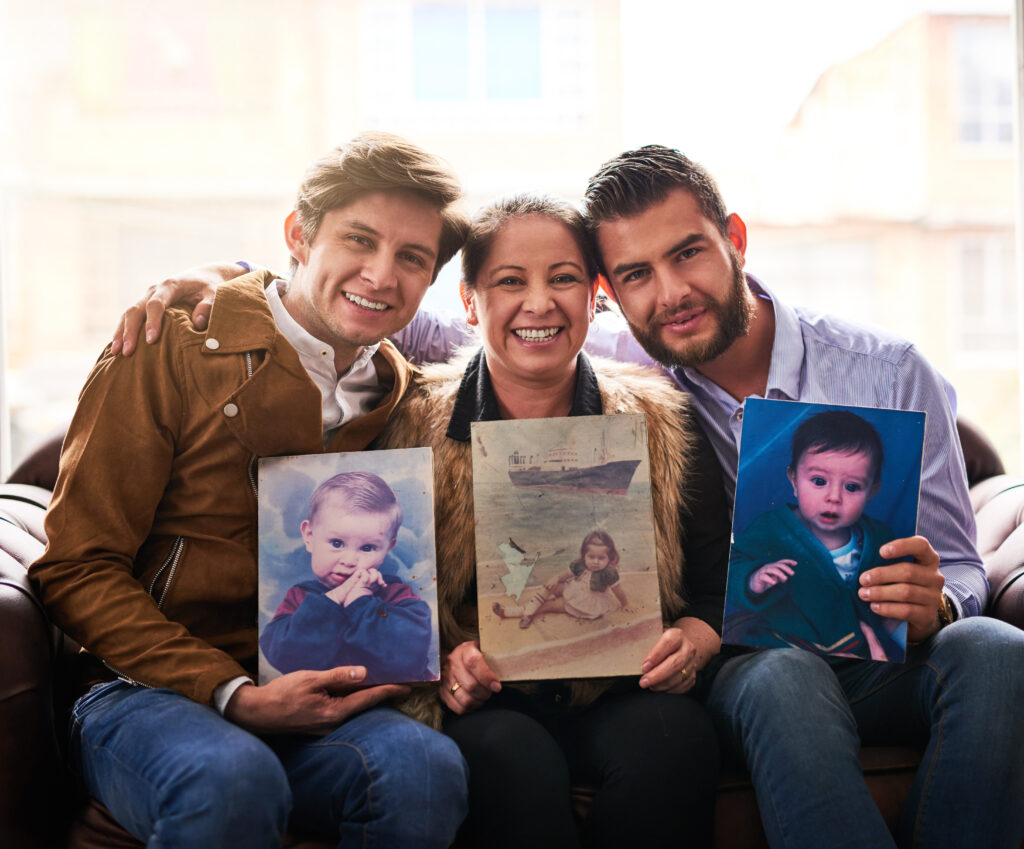
Soon, Tamuna and her father arranged to meet in person. Tamuna’s father introduced her to extended family: half-siblings, cousins, and people who had no idea she existed. The discovery wasn’t just personal; it connected more of their shared lineage.
The digital tools that made it possible
For anyone beginning their own search, social media groups dedicated to adoptees and missing family searches often include volunteers who understand how to trace names, navigate public documents, and interpret DNA results.
Genealogy platforms offer searchable archives, and many public libraries provide free access to these databases. Local community centres and social services can also guide people toward regional support networks.
Documentaries: similar stories we recommend
If you want to know more about how social media and DNA testing can help people reconnect, especially in case of adoption, we recommend watching “Twinsters” a Netflix documentary on the story of twin sisters Anaïs Bordier and Samantha Futerman, separated at birth in South Korea. They found each other on Facebook while one lived in France and the other one in California with their adoptive families.
Hundreds of people use social media to help others reconnect and provide surprising happy endings: these are the cases where these platforms are heroes, not villains.