











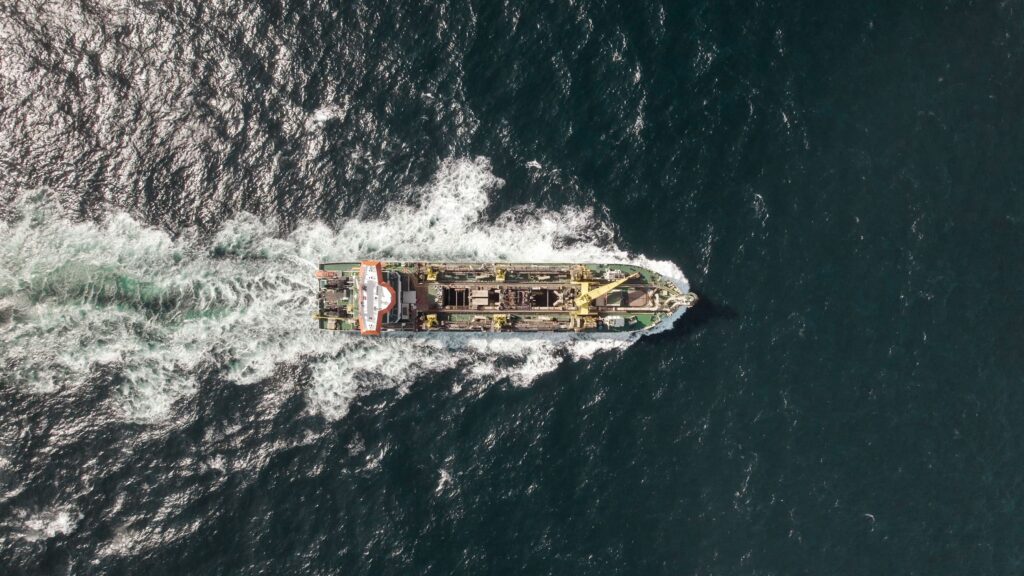
In 2017, Ecuadorian authorities seized a refrigerated cargo vessel in the protected waters of the Galápagos Islands, Ecuador’s Exclusive Economic Zone (EEZ). On board, they found 300 tons of sharks, most of which were protected species. Their action wasn’t just luck: the seizure was a planned operation after a through OSINT investigation that helped them discover the illegal activities of the Fu Yuan Yu 681 and its sister ships.
How OSINT helps monitoring illegal fishing
OSINT is becoming a solid field to monitor and investigate illegal, unreported, and unregulated (IUU) fishing. Open data, satellites, and investigative techniques come together effectively to track vessels, check their ownership and compliance, monitor illegal trade and dark web activities, and use community intelligence.
With the help of satellite analysis, vessel activities can be tracked in real time, and inconsistencies in their behaviours and patterns can be flagged and reported.
The Fu Yuan Yu Fleet takedown
In the case of the Fu Yuan Yu Fleet, analysts from the Global Fishing Watch (founded by Google, SkyTruth, and Oceana) used AIS data to monitor vessel behaviour.
They spotted Chinese-flagged vessels entering Ecuador’s EEZ, where industrial fishing is prohibited. They also noticed suspicious AIS gaps (going “dark”), after which they reappeared near the port.
This behaviour raised enough red flags to continue the investigation through satellite imagery. The correlation of satellite images and AIS data confirmed that the vessels were loitering near the Galápagos, a hotspot for sharks. Night-time light detection also supported the suspicion of fishing activity.
When Ecuadorian authorities seized one of the vessels (the Fu Yuan Yu Leng 999), they confirmed the illegal fishing inside a protected zone.
The outcome of the investigation
Investigators further traced the ships back to Chinese companies operating under flags of convenience. Cross-checking with corporate registries and fleet databases revealed a pattern of repeat offenders.
As a result, the vessel’s captain and crew were prosecuted in Ecuador — sentenced to up to 4 years in prison. The company was fined $6 million USD, one of the largest environmental fines in Ecuador’s history.
This case received global media attention and was cited as a landmark success in OSINT-powered marine conservation.
Other notable wins
Besides this case, OSINT helped authorities achieve other outstanding wins for the environment:
- Between 2017 and 2018, the Sea Shepherd used vessel tracking and patrol collaboration to expose dozens of illegal trawlers in West Africa. As a result, multiple vessels were seized, and Liberia’s fish stocks are now better protected.
- Between 2018 and 2020, Global Fishing Watch, with the help of some journalists, documented hundreds of Chinese squid boats fishing illegally at night in the waters of Argentina and North Korea. The evidence from the investigation was used to pressure China to regulate its distant-water fleet.
- Since 2018, different NGO's and EIA tracked online totoaba maw sales in China, tying them to vaquita bycatch in Mexico. OSINT evidence contributed to international trade sanctions pressure on Mexico and China.
Key OSINT Techniques
OSINT tools such as AIS tracking, satellites, corporate registries, social media, and online marketplaces are now central to:
At Negative PID, we can assist with this type of OSINT investigation.