







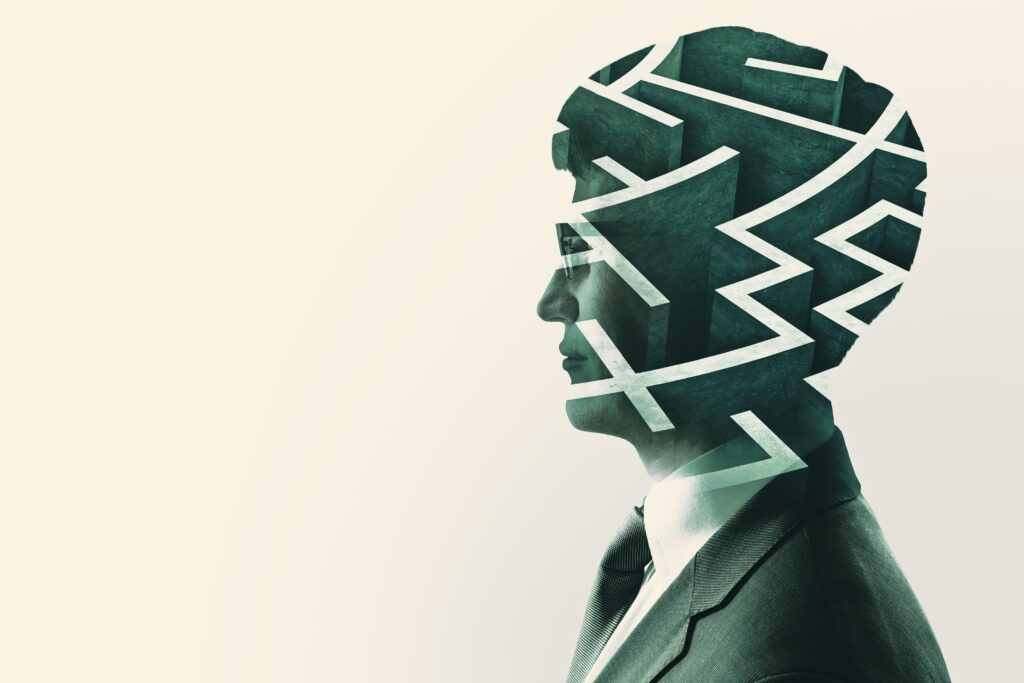
The Mandela Effect refers to a phenomenon in which large groups of people share the same incorrect memory. The term was coined by paranormal researcher Fiona Broome after she discovered that many others, like her, incorrectly remembered Nelson Mandela dying in prison during the 1980s. In reality, Mandela was released in 1990 and later became the president of South Africa.
The intrigue lies not in isolated mistakes, but in shared conviction. When thousands of people confidently remember something that did not happen, the question shifts from individual error to collective cognition.
Famous examples
Over time, numerous cases have been labelled as Mandela Effects. Among the most frequently cited:
- “Berenstein Bears” vs. The Berenstain Bears: many recall the spelling as “Berenstein,” though the books have always been published as “Berenstain.”
- Star Wars Episode V – The Empire Strikes Back quote: the widely quoted line “Luke, I am your father” does not appear in the film. The actual line is “No, I am your father.”
- Snow White and the Seven Dwarfs mirror line: the phrase “Mirror, mirror on the wall” is commonly remembered, yet the film says “Magic mirror on the wall.”
- Monopoly mascot: many insist the character wears a monocle. He does not.
These examples tend to cluster around childhood media, advertising, and iconic pop culture moments, environments where repetition and simplification are common.
Psychological explanations
Cognitive science offers several well-established mechanisms that explain the Mandela Effect without invoking alternate realities.
- Memory reconstruction
Memory is not a recording device. Each recall is a reconstruction. Details are filled in using expectations, cultural templates, and linguistic habits. For example, the “-stein” ending is statistically more common in surnames than “-stain,” making the error intuitive.
- Confabulation
The brain naturally fills gaps to create coherent narratives. When one detail feels incomplete or inconsistent, the mind substitutes something more familiar.
- Source confusion
People may blend multiple references, parodies, or adaptations into one memory. A misquoted line repeated in the media can overwrite the original.
- Social reinforcement
Alternate reality theories
While psychologists attribute the phenomenon to cognitive processes, some online communities propose more dramatic explanations. These include parallel universes overlapping, timeline shifts, simulation glitches, and quantum interference.
These interpretations often reference speculative readings of quantum mechanics or multiverse theories. However, there is no empirical evidence linking physics to collective memory errors.
The appeal lies not in scientific plausibility, but in existential comfort. If reality changed, then memory remains trustworthy. The error lies outside the self.
Why the Mandela effect feels so powerful
The intensity of conviction is central to the phenomenon. People do not casually misremember these details. They remember vividly.
This confidence reflects how memory functions. Emotional salience, repetition, and cultural embedding create strong subjective certainty. Unfortunately, certainty is not accuracy.
The Mandela Effect exposes a psychological tension: we trust memory as part of identity. When memory fails, identity feels threatened.
The Internet as an amplifier
Before the digital era, misremembered details remained isolated. Today, online forums and social media enable rapid clustering of shared memories. The discovery of agreement produces validation.
The digital culture also encourages remixing, parody, and repetition. Misquotes become memes. Over time, the incorrect version may become more culturally visible than the original. The Mandela Effect thrives in environments where replication outpaces verification.
Cultural implications
Beyond pop culture trivia, the Mandela Effect raises deeper questions about collective memory and truth. Historical memory, political narratives, and social events are also shaped by reconstruction and repetition.
If groups can misremember fictional details, what safeguards exist for more consequential memories?