









Long before laptops and cloud computing became part of everyday life, a small gathering in a Silicon Valley garage changed the course of personal computing. The Homebrew Computer Club was a meet-up run by enthusiasts who wanted to understand and build computers at a time when they were rare, expensive, and largely inaccessible. From that informal setting emerged ideas and collaborations that reshaped the technology landscape.
A meeting place for technical curiosity
The club began in 1975 in Menlo Park, California. Its first meeting took place in a garage owned by a group of engineers who had access to an early microcomputer called the Altair 8800. That machine captured the imagination of people across the region. It offered something new, a computer small enough and affordable enough for hobbyists who wanted to build and modify their own systems.
Word spread quickly. Within months, the club moved from the garage to a hall that could handle a growing crowd. Academics, engineers, students, radio hobbyists, and curious beginners all attended, united by a shared desire to experiment.
A culture of openness
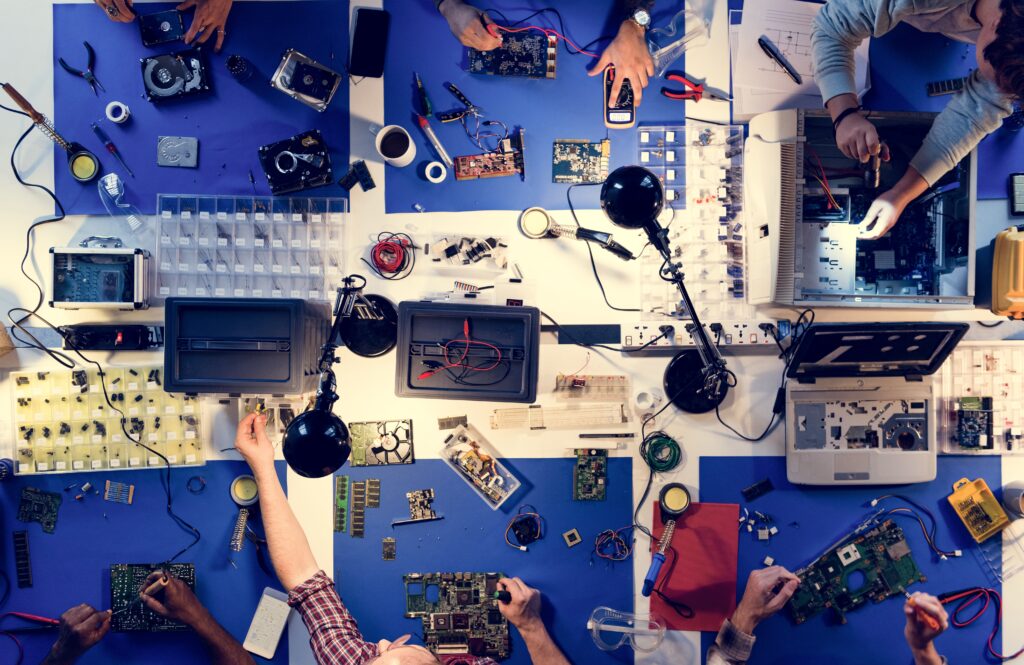
One of the club’s defining traits was its approach to knowledge. Members freely shared schematics, code, parts, and ideas. People would bring partially built hardware and pass it around for others to examine. Problems were solved collaboratively, and newcomers were welcomed rather than excluded.
This open exchange became a hallmark of early computing culture. The club operated on the principle that understanding a system from the inside, learning how it worked from first principles, made innovation possible. The environment encouraged creativity and technical risk-taking.
Famous members of the Homebrew Computer Club
Many well-known figures passed through the club, including:
- Steve Wozniak, who demonstrated early prototypes of the Apple I during meetings. His presentations attracted interest from other members and helped shape Apple’s first products.
- Steve Jobs, who attended with Wozniak and recognised the business potential of their designs.
- Lee Felsenstein, a central organiser who later designed influential portable computers such as the Osborne 1.
- John Draper, known from his phone phreaking years, who shared knowledge of hardware and software at meetings.
- Bob Marsh, co-founder of Processor Technology, which produced key components for early personal computers.
From meetups to industry impact
The club did not set out to create a commercial revolution, yet its influence reached far beyond its meetings. Members contributed to the development of early microcomputers, operating systems, storage formats, and programming tools. Apple, Processor Technology, Cromemco, and several other early companies grew from relationships formed there.
The collaborative mindset also shaped software culture. Many members believed that programs should be shared, examined, and improved. This thinking influenced later open-source communities.
The power of collaboration
The Homebrew Computer Club directly led the transformation of the computer industry. In its meetings, capable individuals, working together with minimal resources, created solutions that challenged established corporations.
Curiosity, shared learning, and local networks of expertise still fuel much of the technical progress in areas like offensive security, hardware hacking, and system design.
A global movement
Although the club eventually faded as personal computers became mainstream, its principles continue to shape how people build, research, and understand technology.
Communities around open hardware, free software, hacking, and maker culture can trace part of their lineage back to those meetings in Menlo Park.