











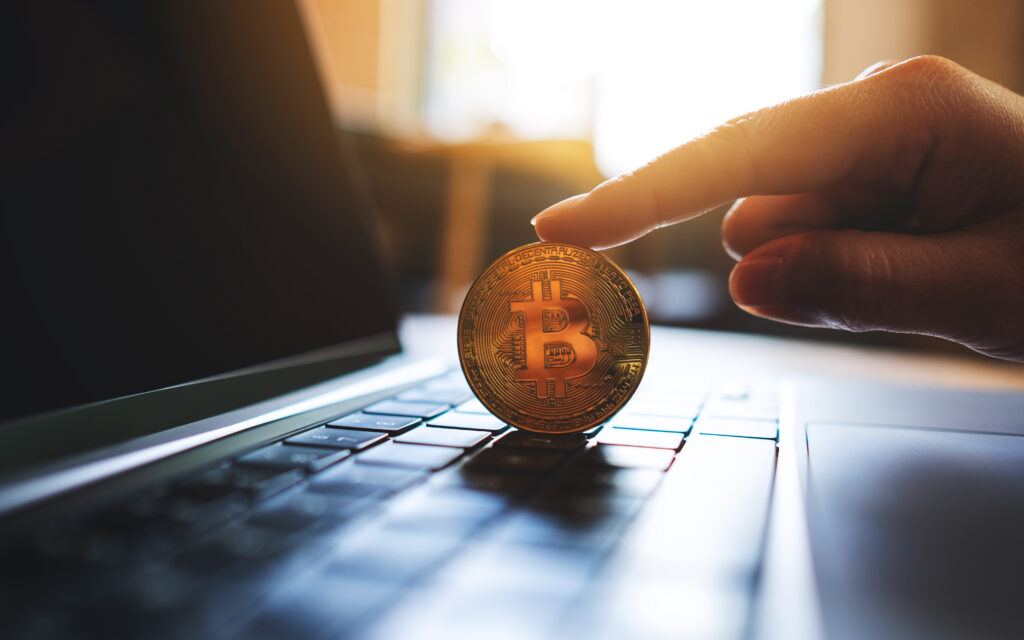
Everybody talks about Bitcoin and Blockchain. In recent years, they have become a common topic in tech, finance, cybersecurity, and even politics. But what do they really mean? If you would like to understand how it all works and why people are so passionate about it, this is a read for you.
What is Bitcoin?
- Bitcoin is a type of digital currency, also called cryptocurrency, that allows people to send money over the internet without a bank or financial institution. It was invented in 2008 by a person (or group) using the pseudonym Satoshi Nakamoto.
Like other cryptocurrencies, Bitcoin is decentralized, meaning that no government or organization controls it. It’s also available in a limited supply: there will only be 21 million bitcoins. Bitcoin transactions are made peer-to-peer. You can send Bitcoin to someone else without involving a bank and do so anonymously. Wallet addresses, not names, indeed identify Bitcoin users. Transactions are verified by network participants called “miners.”
What is the Blockchain?
- The Blockchain is the technology that powers Bitcoin. Think of it as a public ledger or digital notebook that records every Bitcoin transaction.
Here is how the blockchain works: when people exchange Bitcoins, these transactions are grouped into a “block.” Miners solve a complex mathematical puzzle to add the block to the chain. The block is then added to the Blockchain, and the transaction is confirmed. At that point, everyone on the network gets an updated copy of the ledger.
You can think of the Blockchain like a Google Doc where everyone can see and verify the changes, but only valid updates (blocks) are added.
What is mining?
- Mining is the process of validating transactions and adding them to the Blockchain. It involves solving complex math problems using computing power. Mining ensures the network stays secure and trustworthy.
Miners are rewarded with new bitcoins (called a block reward). Mining is indeed a competitive activity: only the first miner to solve the puzzle gets rewarded.
Is Bitcoin secure?
Bitcoin is considered to be secure because:
- Cryptography ensures that transactions are legitimate and tamper-proof.
- Thousands of computers - called nodes - verify the ledger.
- Mining requires energy and effort, making attacks expensive.
How is Bitcoin used?
Is Bitcoin risk free?
Bitcoin is secure, but it doesn’t mean that it’s risk-free. Cryptocurrencies are unregulated. Therefore, they are subject to price volatility, and their value can change dramatically, potentially swinging both ways. Furthermore, Bitcoin transactions are irreversible, and mistakes can’t be undone.
Finally, as with any online valuable transaction, Bitcoin exchanges are targeted by scammers with phishing and fake exchanges.
A new way of exchanging money
Bitcoin and Blockchain are revolutionary technologies that challenge traditional financial systems. While the concepts may seem technical initially, they offer a new way to transact, store value, and build trust, without relying on intermediaries.