








It began not as a movement, but as a joke. Long before Anonymous became a symbol of digital rebellion — before the Guy Fawkes masks, the viral operations, and the political manifestos — it was simply a username. In the early 2000s, imageboard 4chan users posted without registration. When no name was entered, the board defaulted to one word: Anonymous.
Who are Anonymous?
In the 4chan chaotic digital petri dish of memes, trolling, and unfiltered speech, a strange collective identity took form. Users began to act as if Anonymous were a single, mischievous entity — a swarm with one face and a thousand minds. What started as digital absurdism soon evolved into something far more consequential: the birth of the world’s most recognizable hacktivist collective.
- A hacktivist collective is a group of individuals who unite to conduct cyber attacks in support of political, social, or ideological causes, often using hacking techniques to promote their agenda. Unlike traditional cybercriminals, hacktivists generally do not seek financial gain; instead, their actions are motivated by a desire to influence public opinion, expose wrongdoing, or protest policies.
From pranks to protests
In the mid-2000s, Anonymous was synonymous with “lulz” — acts of trolling performed for amusement rather than ideology. Early targets included online games, chatrooms, and fringe communities. It was an anarchic form of internet mischief: pranks amplified by collective anonymity.
Everything changed in 2008, when the Church of Scientology attempted to suppress a leaked video of actor Tom Cruise praising the organization. The Church’s aggressive use of copyright takedowns angered the 4chan community. What followed was Project Chanology, a coordinated campaign of digital protest that combined distributed denial-of-service (DDoS) attacks, prank calls, and, for the first time, real-world demonstrations outside Scientology centers.
Masked protestors, many donning Guy Fawkes masks popularized by V for Vendetta, carried signs bearing a slogan:
“We are Anonymous. We are Legion. We do not forgive. We do not forget.”
Anonymous
It was a moment of metamorphosis. The trolls had found a cause.
The birth of a collective mind
Unlike traditional activist groups, Anonymous had no hierarchy, no central leadership, and no manifesto. Operations were proposed spontaneously in IRC chatrooms, imageboards, and later Pastebin or Twitter threads. Anyone could join an “Op.” Anyone could claim the mask.
This radical decentralization became both its strength and its curse. The absence of formal structure made Anonymous resilient — impossible to shut down entirely. But it also meant no accountability and no consensus about what the collective actually stood for.
Some members sought justice through exposure, targeting child exploitation networks or corrupt corporations. Others saw it as performance art, a digital spectacle that challenged power with chaos. Still others simply wanted attention.
As one early participant told Wired in 2012: “There is no real Anonymous. There’s just an idea that anyone can use.”
The ideology of anonymity
If Anonymous had a philosophy, it was born from the culture of the internet itself. Free speech, anti-censorship, and resistance to authority were woven into the DNA of online communities that rejected control.
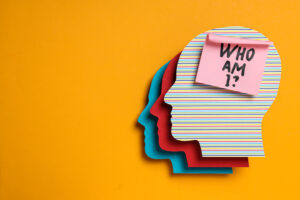
The mask — both literal and symbolic — embodied this principle. Behind it, anyone could be Anonymous, and everyone could disappear. In that anonymity lay both freedom and danger: freedom to act without fear, and danger in the absence of restraint.
This ideology resonated in a world where surveillance was expanding and privacy was shrinking. Anonymous was both a protest against control and a mirror of the internet’s chaos.
The movement
After Project Chanology, Anonymous began to appear wherever digital activism flared. During the Arab Spring, members launched Operation Tunisia, helping activists evade government censorship. During Operation Payback, they targeted financial institutions that cut off donations to WikiLeaks. These were the first signs of a new phase — Anonymous as a political actor, not just an online mob.
The group’s methods — DDoS attacks, data leaks, and coordinated social media campaigns — blurred the line between activism and cybercrime. Law enforcement agencies, from the FBI to Interpol, began taking the group seriously. Arrests followed, but the swarm endured. For every “Anon” unmasked, others emerged.
What's left of the early years
Anonymous’ early years were a paradox. Out of the anarchic chaos of 4chan rose a force capable of global disruption — but also incapable of self-governance. The same anonymity that empowered it also fragmented it.
Still, those first operations defined a new mode of digital resistance. Anonymous didn’t invent hacktivism, but it popularized it — turning lines of code and memes into tools of protest. The mask became a global symbol, worn by protesters from Occupy Wall Street to Hong Kong.
The movement proved something profound about the 21st century: that collective identity online could wield real-world power, even without leaders, money, or borders.