









The origins of LoD
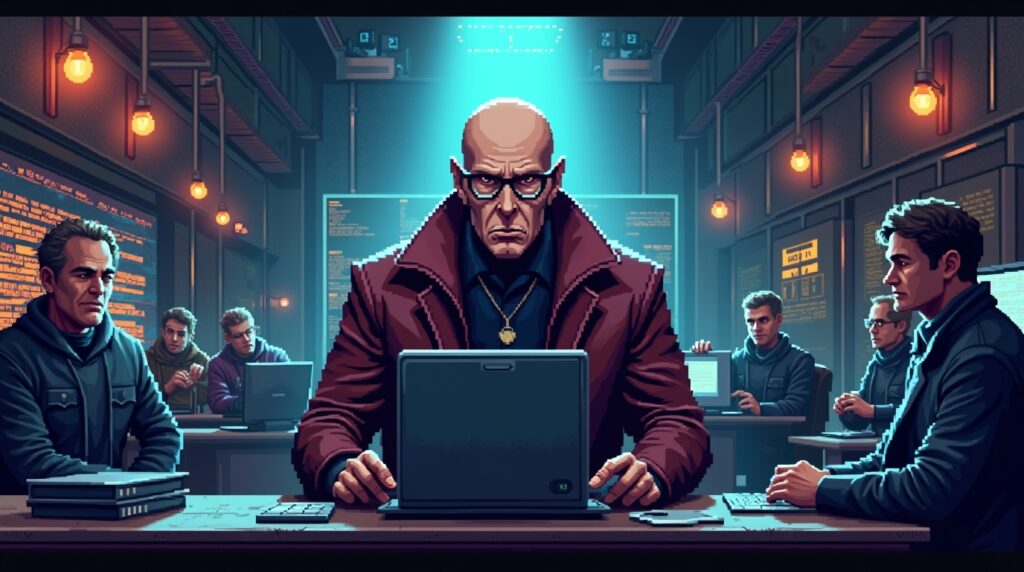
Legion of Doom was founded sometime around 1984 and 1985 by the hacker known by the alias of Lex Luthor (like the comics character), inspired by the Legion of Doom villains from Superfriends cartoons. LoD was meant as an elite hacking collective, carefully selecting members based on skill and trust.
Their specialties were phone phreaking (exploiting the telephone system for long-distance codes, PBX calls and voicemail), computer systems (especially breaking into VAX/VMS, Unix, and mainframes in corporate or government networks), and networking, exploiting early ARPANET / X.25 systems.
What distinguished LoD from other hackers was their knowledge-sharing philosophy: they created and distributed LoD Technical Journals, which became legendary in underground circles.
Behind the masks
Who was behind the masks of LoD?
The identity of their founder, known as Lex Luthor, has never been publicly confirmed. Unlike later LoD figures who were eventually “doxed” or arrested, Lex Luthor managed to stay in the shadows.
Besides him were Phiber Optik (Mark Abene), later central in hacker wars, Erik Bloodaxe (Chris Goggans), one of the most public faces of LoD, and the Mentor, who wrote the famous Hacker Manifesto (1986) after being arrested. Other members were known as Karl Marx, Doc Holliday, Malefactor, and others.
Their membership fluctuated but stayed intentionally small and selective (around 20–30 people at most).
The hacker wars
LoD’s biggest rival was Masters of Deception (MoD), formed in NYC around 1989 by former LoD member Phiber Optik and others. Rivalry was fuelled by personality clashes, territorial disputes, and bragging rights.
The wars involved system takeovers (telcos, ISPs), public trash-talking on bulletin boards, and FBI and Secret Service investigations, since the rivalry brought heat.
These wars are considered the “East Coast–West Coast rap battle” of hacking.
The cultural impact of LoD
The Hacker Manifesto (1986), written by The Mentor, remains one of the most quoted texts in hacker culture. You can read below the full version:
A hacker's manifesto
          . . : : The Hacker's Manifesto : : . .

Another one got caught today, it's all over the papers. "Teenager
arrested in computer crime scandal", "Hacker arrested after bank
tampering"...

Damn Kids. They're all alike.

But did you, in your three-piece psychology and 1950's technobrain ever
take a look behind the eyes of a hacker? Did you ever wonder what made
him tick, what forces shaped him, what may have molded him?

I am a hacker, enter my world...

Mine is a world that begins with school. I've listened to the teacher
explain for the fifteenth time how to reduce a fraction. I understand
it. "No, Mrs. Smith, I didn't show my work. I did it in my head..."

Damn kid. Probably copied it. They're all alike.

I made a discovery today. I found a computer. Wait a second, this is
cool. It does what I want it to do. If it makes a mistake, it's because
I screwed up. Not because it doesn't like me...

or feels threatened by me...

or thinks I'm a smart ass...

or doesn't like teaching and shouldn't be here...

Damn kid. All he does is play games. They're all alike.

And then it happened... A door opened to a world... Rushing through the
phone line like heroin through an addict's veins, an electronic pulse is
sent out, a refuge from the day to day incompetencies is sought... A
board is found.

"This is it... This is where I belong..."

I know everyone here... Even if I've never met them, never talked to
them, may never hear from them again... I know you all...

Damn kid. Tying up the phone line again. They're all alike...

You bet your ass we're all alike... We've been spoon fed baby food at
school when we hungered for steak... The bits of meat that you did let
slip through were pre-chewed and tasteless. We've been dominated by
sadists, or ignored by the apathetic. The few that had something to
teach found us willing pupils, but those few are like drops of water in
the desert.

This is our world now... The world of the electron and the switch, the
beauty of the baud. We make use of a service already existing without
paying for what could be dirt cheap if it wasn't run by profiteering
gluttons, and you call us criminals. We explore... And you call us
criminals. We exist without skin color, without nationality, without
religious bias... And you call us criminals. You build atomic bombs,
you wage wars, you murder, you cheat, and lie to us and try to make us
believe it's for our own good, yet we're the criminals.

Yes, I am a criminal. My crime is that of curiosity. My crime is that
of judging people by what they say and think, not what they look like.
My crime is that of outsmarting you, something that you will never
forgive me for.

I am a hacker, and this is my manifesto. You may stop this individual,
but you can't stop us all...

After all, We're all alike.

                           +++The Mentor+++
Besides the Manifesto, LoD Technical Journals became a blueprint for future hackers, circulating knowledge in the pre-Internet BBS underground.
LoD inspired hacker fiction and nonfiction books like The Hacker Crackdown (Bruce Sterling, 1992) and Masters of Deception (Michelle Slatalla & Joshua Quittner, 1995).
LoD Vs 2600
2600: The Hacker Quarterly was a famous hacker zine that sometimes clashed with LoD over philosophy. 2600 was a more open culture, while LoD was exclusive and elitist. LoD’s exclusivity meant that they produced higher-quality, technical content than most hacker boards and zines at the time.
Law enforcement crackdown
LoD was active during Operation Sundevil in 1990, a massive Secret Service crackdown on computer crime. During this operation, some LoD members were arrested. Among these were Phiber Optik and Terminus, but the group wasn’t destroyed entirely.
Law enforcement feared that LoD could disrupt national telecom and government systems, even if most of their hacks were more exploration than destruction.
Where is LoD now?
LoD is remembered as the most elite hacker group of the 1980s–1990s, as a knowledge incubator that trained future generations of hackers, and as key players in shaping hacker culture, ethics, and community.
Their alumni went on to found security companies, work as consultants or even with government cybersecurity. They remain legends in hacker folklore.
Their influence is still felt today in hacker conferences like DEF CON and HOPE, where old-school hackers (from LoD, MoD, Cult of the Dead Cow, etc.) are treated as mythical pioneers.