








Across the internet, identity has become increasingly flexible. People adopt avatars, usernames, and aesthetic personas that allow them to experiment with how they present themselves to the world. Among the more unusual and often misunderstood expressions of this identity experimentation are kin communities, sometimes called otherkin, fictionkin, or simply kin groups.
Members of kin communities identify strongly with non-human beings, fictional characters, or symbolic archetypes. For some participants, this identification is metaphorical or aesthetic. For others, it represents a deeper belief that their identity, spirit, or internal sense of self is connected to something beyond their physical human form.
Kin communities challenge conventional ideas about identity, authenticity, and imagination. They are products of internet culture, but they also draw from much older human traditions of myth, symbolism, and self-narration.
From mythology to message boards
The roots of kin identity stretch far beyond the internet. Many cultures have traditions in which individuals identify with animals, spirits, or mythological beings. Shamanic practices, spiritual totems, and folklore often describe forms of identity that transcend the physical body.
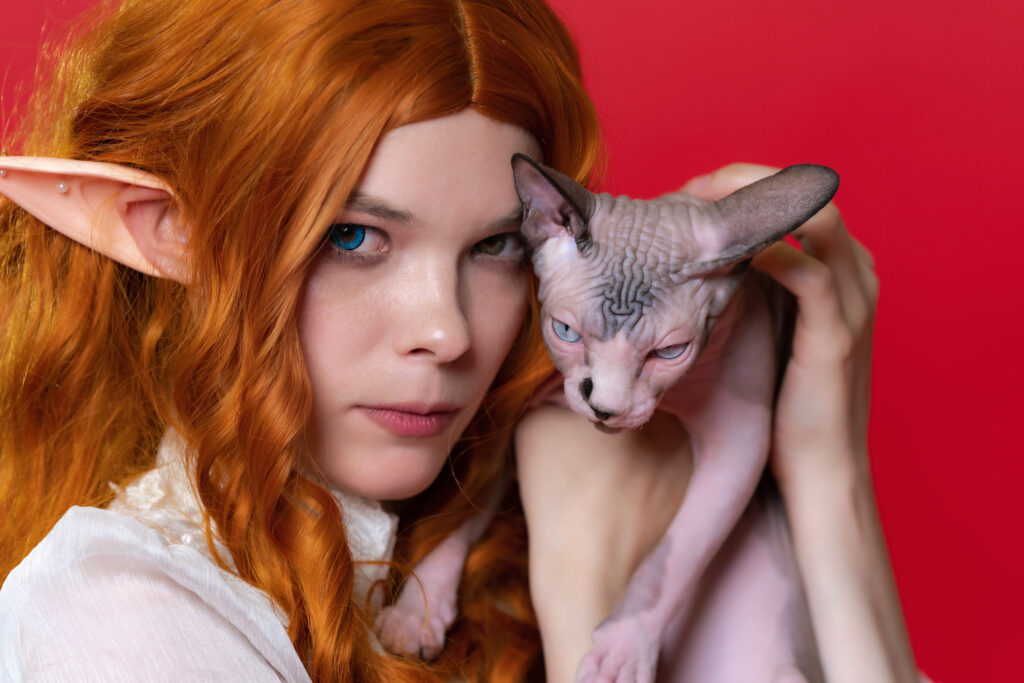
Modern kin communities began to emerge in the early internet era of the 1990s and early 2000s. Early participants gathered on mailing lists, IRC channels, and forums to discuss experiences of identifying as dragons, wolves, elves, or other mythical beings. These groups used the term otherkin to describe individuals who felt that their inner identity did not fully align with being human.
As online fandoms expanded, a related phenomenon appeared: fictionkin, individuals who felt a deep identity connection with characters from books, games, anime, or films.
The internet did not invent these experiences, but it allowed people who felt isolated or unusual to find others with similar feelings.
What does it mean to be a kin?
Within kin communities, identification can take many forms. Participants often describe their connection in terms such as:
- Feeling that their personality aligns with a particular creature or character
- Experiencing vivid imaginative identification with a fictional world
- Believing their spirit or identity originated elsewhere
- Using kin identity as a framework for self-understanding
For some, kin identity is primarily symbolic or aesthetic. It may function similarly to identifying strongly with an archetype or narrative character.
For others, the identification is taken more literally. They may describe memories, instincts, or emotional responses that feel connected to the entity they identify with.
These interpretations vary widely across the community.
Fictionkin and media identity
One of the most visible branches of kin culture is fictionkin, where individuals identify with characters from fictional media. Examples might include identification with characters from anime and manga, fantasy novels, video games, animated series, and internet media.
Participants may feel that their personality, experiences, or emotional patterns closely mirror those of a specific character. In some cases, they describe memories or emotional responses connected to the fictional narrative.
Skeptics often interpret this as intense fandom. Within kin communities, however, the experience is framed as identity rather than admiration.
Community language and structure
Kin communities have developed their own vocabulary to describe experiences. Common terms include:
- Kin type: the entity or character someone identifies with
- Shift: a moment where a person feels particularly connected to their kin identity
- Source: the fictional or mythological origin associated with a kin identity
- Doubles: other people who share the same kin identity
This language allows participants to discuss subjective experiences in ways that feel structured and meaningful.
Platforms and online spaces
Kin communities exist primarily in digital environments.Tumblr played a major role in the growth of kin discourse during the 2010s. Today, Reddit hosts several communities dedicated to otherkin and fictionkin discussion, while smaller, moderated groups are on Discord. Personal blogs and identity journals are also quite popular.
These spaces allow participants to document experiences, share art, and discuss personal interpretations of identity.
For these communities, the ability to communicate anonymously is particularly important. Kin identity often attracts ridicule in broader online spaces, so many communities maintain semi-private environments.
Identity exploration and self-narrative
At a deeper level, kin communities can be understood as part of a broader phenomenon: narrative identity construction. Humans naturally understand themselves through stories. Mythology, religion, and literature have long provided frameworks for interpreting personality and experience.
Kin identity takes this process further by allowing individuals to adopt narrative frameworks directly as self-descriptions. For some participants, identifying with a dragon, a fictional hero, or an archetypal figure provides a symbolic language for describing emotions that might otherwise feel difficult to articulate.
The role of fandom culture
Fandom culture strongly overlaps with kin communities. Many kin identities originate from media with passionate fan bases. However, fandom and kin identity are not identical.
Fans admire characters and stories. Kin participants often describe a deeper sense of identification, sometimes framing it as personal history or internal truth. The distinction may seem subtle to outsiders, but within these communities it is considered important.
Criticism and controversy
Kin communities frequently attract skepticism or criticism from outside observers. Common criticisms include claims that kin identity encourages escapism, concerns about reinforcing delusional thinking, and accusations that the practice trivialises identity issues.
Memes and ridicule have often targeted kin communities, particularly during the Tumblr-heavy internet culture of the mid-2010s. Despite this, the communities persist, often becoming more private or moderated in response to external attention.
Psychological interpretations
Psychologists who study online identity communities tend to interpret kin identification through several frameworks.
One of these is the symbolic identity formation: kin identities may function as metaphors for personality traits or emotional experiences. The narrative self-construction framework explains kins as individuals who use stories and characters as tools to understand themselves. Another framework is imaginative immersion: strong engagement with fictional worlds can blur the boundary between admiration and identification. Community reinforcement is the mechanism that allows shared language and social validation to stabilize interpretations of these personal experiences.
These explanations do not necessarily invalidate participants’ perspectives. Instead, they highlight the social and cognitive mechanisms that make such identities possible.
Kin communities and internet cultures
Kin communities illustrate several broader patterns in digital culture.
- First, the internet allows people with unusual or niche experiences to find one another. Practices that might once have remained isolated become structured communities.eone identifies with
- Second, online spaces encourage identity experimentation. Avatars, usernames, and aesthetic personas create environments where identity is fluid rather than fixed.
- Third, digital communities increasingly blur the line between fiction and personal narrative. Characters and stories become tools for expressing aspects of self.
Loneliness, belonging, and shared worlds
For many participants, kin communities are less about metaphysical claims and more about belonging. Members often describe feeling misunderstood in offline environments, finding emotional validation online, and connecting with people who share similar interpretations of identity.
In this sense, kin communities function similarly to many online subcultures. They provide social space, vocabulary, and mutual recognition.