












In the early 1990s, only a small number of researchers and enthusiasts used the Internet. Navigation relied on text-driven interfaces. Until Marc Andreessen, a young software developer at the University of Illinois’ National Center for Supercomputing Applications, transformed Mosaic into the Netscape Navigator.
The NCSA Mosaic project
Andreessen joined the NCSA as an undergraduate and began working with a small team led by Eric Bina. Their goal was to develop an easy-to-use graphical browser for the emerging web. At that time, most Internet tools required technical expertise. The challenge was not the web itself, but the lack of accessible software that allowed people to explore it.
Mosaic, released in 1993, introduced features that would become standard in later browsers:
- Inline images that displayed directly on the page
- A clean, clickable interface
- The ability to run on common operating systems, including Windows and Macintosh
- Easy navigation through buttons, menus, and bookmarks
This combination made Mosaic far more intuitive than earlier tools, and it immediately captured the attention of universities, researchers, and early technology adopters.
Moving from research to the industry
The success of Mosaic caught the attention of Silicon Valley investors. Andreessen moved to California and partnered with Jim Clark, a veteran entrepreneur who had founded Silicon Graphics. Together they started a new company, Mosaic Communications Corporation, which later became Netscape Communications.
Their goal was to build a commercial-grade browser that would outperform Mosaic in speed, stability, and capabilities.
The first commercial browser: netscape Navigator
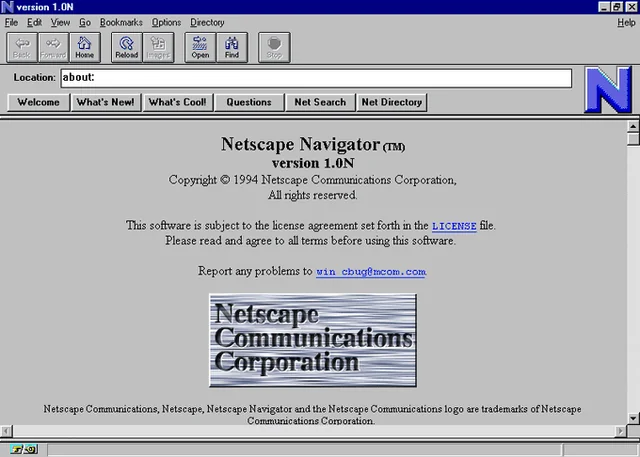
In 1994, Netscape Navigator was released. It quickly became the dominant browser for early Internet users.
Navigator improved on Mosaic in several ways: it had faster page rendering, better support for web standards, cross-platform availability, and a more polished and consistent interface.
Netscape also introduced innovations that shaped the future of web browsing. Early versions supported secure communication through SSL, which became essential for e-commerce and online services. Netscape helped popularise JavaScript, increasing interactivity on the web.
By capturing the confidence of businesses and developers, Netscape positioned the browser as the centre of the emerging Internet economy.
The browser wars
Navigator’s rapid growth triggered the first “browser war” when Microsoft released Internet Explorer and bundled it with Windows. Microsoft’s strategy eventually overtook Netscape’s market share, but by then the browsers had achieved their most important goal. They had pushed the web into mainstream use.
Andreessen’s work helped establish the browser as the primary gateway to the Internet. With a graphical interface, anyone could read news, join communities, download software, and later engage in e-commerce. The browser became the universal tool for navigating digital information.
A legacy that continues
After Netscape, Andreessen moved into other ventures, including founding Opsware and co-founding Andreessen Horowitz, an influential venture capital firm. His contributions continue to influence web development and digital entrepreneurship.
Yet his most lasting achievement remains the early browser revolution.