











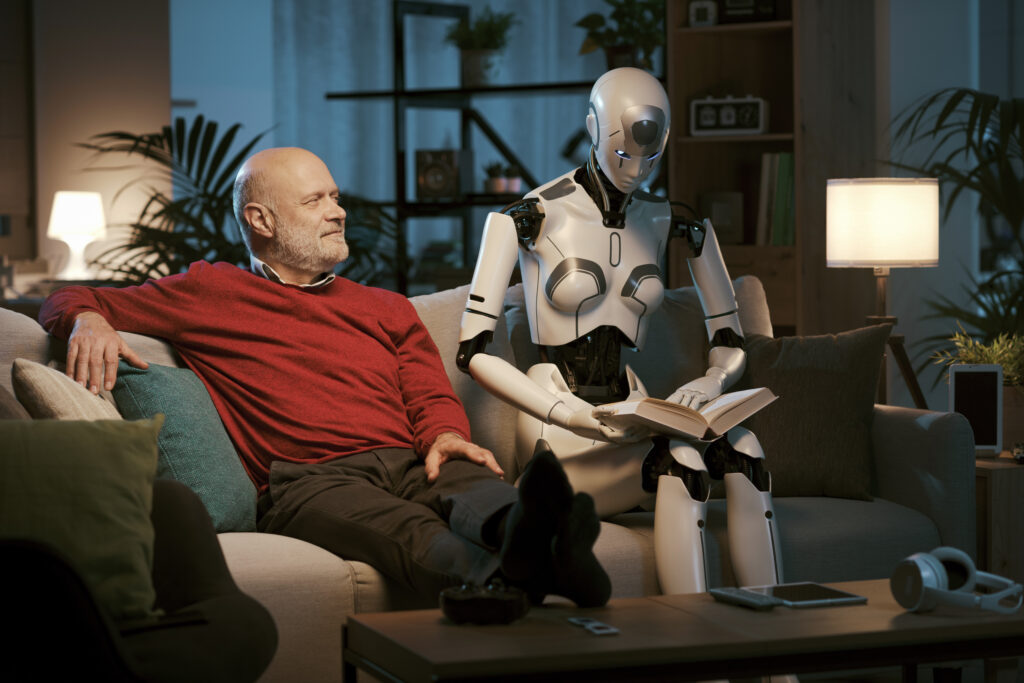
For most of history, companionship has been considered an exclusively human experience. Friendships, family bonds, mentorship, and romantic relationships formed the foundation of social life. Today, however, advances in robotics and artificial intelligence are challenging long-held assumptions about what companionship means and who, or what, can provide it.
Robots are increasingly being designed to interact socially. Some assist elderly individuals living alone. Others help children cope with illness or developmental challenges. A growing number are marketed as companions capable of conversation, emotional support, and even simulated friendship.
This raises a question that would have sounded like science fiction only a few decades ago: can people form meaningful relationships with machines?
The answer appears to be yes, at least from a psychological perspective. The more difficult question is whether society should encourage those relationships and what the long-term consequences may be.
The loneliness problem
The rise of companion robotics is closely tied to a broader social phenomenon: loneliness. Many countries are experiencing demographic and cultural shifts that have increased social isolation.
Contributing factors include:
- Aging populations
- Smaller family units
- Geographic mobility
- Remote work
- Urban anonymity
- Digital communication replacing face-to-face interaction
Researchers increasingly describe loneliness as a significant public health concern. Chronic social isolation has been associated with negative physical and psychological outcomes, including increased stress, depression, and reduced quality of life.
For governments, healthcare systems, and technology companies, the question becomes whether technology can help address some of these challenges.
Companion robots are one proposed solution.
Why humans bond with machines
Humans are remarkably skilled at attributing emotions, intentions, and personalities to non-human entities.
People routinely name their cars, talk to pets, and become emotionally attached to fictional characters. We instinctively look for signs of agency and personality in the world around us. Robotics takes advantage of this tendency.
Even relatively simple robots can trigger emotional responses if they display behaviours that resemble attention, curiosity, affection, or responsiveness. A robot does not need genuine emotions to create the perception of emotional engagement. This distinction lies at the heart of the companion robotics debate.
The machine may not feel anything, but the human interacting with it often does.
The first generation of social robots
Some of the earliest companion robots were intentionally simple. Robotic pets, for example, were developed to provide comfort and interaction without the responsibilities associated with caring for real animals.
These systems demonstrated something important: people often respond emotionally to machines even when they fully understand that the machines are artificial. In healthcare settings, robotic animals have been used with elderly individuals and dementia patients to encourage engagement and reduce feelings of isolation.
The effectiveness of these systems is not necessarily based on deception. Many users know the robot is not alive yet still derive comfort from the interaction. This highlights a unique characteristic of human psychology: emotional value does not always depend on authenticity.
AI changes the equation
Modern artificial intelligence has significantly expanded the capabilities of companion robots. Earlier systems relied on scripted responses and limited behaviours. Today’s systems can:
- Maintain conversations
- Recognize voices
- Remember preferences
- Adapt interactions over time
- Respond to emotional cues
- Personalize experiences
As conversational AI improves, companion robots increasingly resemble social partners rather than interactive devices. The distinction between tool and companion becomes less clear.
A robot that remembers personal details, responds empathetically, and engages in regular conversation can begin to occupy a social role in a person’s life, even if the underlying interaction remains entirely artificial.
Elder care and social support
- Daily interaction
- Cognitive stimulation
- Medication reminders
- Emergency monitoring
- Communication assistance
Supporters argue that these systems can improve quality of life while helping individuals maintain independence. Critics worry that robots may become substitutes for human contact rather than supplements to it.
The concern is not that robots provide companionship, but that institutions may use them as a justification for reducing human interaction.
The distinction is important. A robot that supplements human relationships serves a different purpose than one that replaces them.
Children and emotional development
Companion robots are also being introduced into educational and therapeutic environments. Some assist children with autism spectrum disorders by providing predictable social interactions. Others help children learn communication skills or cope with medical treatments.
These applications often show promising results because robots offer consistency and patience that can be difficult to replicate in human interactions. Yet researchers continue to study how prolonged interaction with social robots may influence emotional development.
Questions remain about:
The technology is advancing faster than our understanding of its long-term psychological effects.
The rise of synthetic relationships
As robots become more sophisticated, entirely new forms of relationships are emerging. Some individuals already report viewing AI-powered companions as friends, confidants, or emotional partners.
The appeal is understandable. Synthetic companions offer characteristics that many human relationships do not:
- Constant availability
- Non-judgemental responses
- Unlimited patience
- Personalization
- Emotional consistency
These qualities can be comforting. They can also create unrealistic expectations about how relationships function.
Human relationships involve compromise, disagreement, unpredictability, and mutual growth. Synthetic relationships are fundamentally different because the interaction is designed around one participant’s needs and preferences.
This asymmetry introduces both opportunities and risks.
The ethical questions
Companion robotics raises some of the most complex ethical issues in the robotics field.
Authenticity
Can a relationship be meaningful if one participant is incapable of genuine emotion? Some argue that emotional experiences are real regardless of the source. Others contend that simulated empathy is fundamentally different from authentic human connection.
Could individuals become overly dependent on synthetic companions? A robot designed to maximize engagement may unintentionally encourage social withdrawal from human relationships.
Companion robots collect extensive information about users. They may learn personal preferences, emotional vulnerabilities, fears, habits, and routines.
Who controls that data? How might it be used? The possibility of emotionally persuasive technologies introduces significant concerns about influence and manipulation.
Vulnerable populations
Many users of companion robots are elderly individuals, children, or people experiencing emotional distress. Organizations deploying these systems must consider whether users fully understand the nature of the relationship being presented.
The business of companionship
Companion robotics is also becoming a commercial industry. Companies increasingly view loneliness as a market opportunity. Subscription-based AI companions, robotic pets, conversational assistants, and social robots are all part of a growing ecosystem designed to provide emotional engagement.
This creates an unusual dynamic. For the first time in history, emotional connection itself is becoming a commercial product. The incentives associated with that business model deserve careful examination. If engagement generates revenue, systems may be optimized to maximize emotional attachment rather than user well-being.
Are companion robots good or bad?
The answer is unlikely to be simple.
Companion robots have demonstrated genuine benefits in healthcare, elder care, education, and mental wellness support. They can reduce isolation, encourage engagement, and provide meaningful assistance to individuals who might otherwise receive little interaction.
At the same time, synthetic relationships introduce risks that society has not fully explored. Questions about authenticity, dependency, privacy, and emotional manipulation remain unresolved.
Companion robots are neither inherently beneficial nor inherently harmful. Like many technologies, their impact depends on how they are designed, deployed, and integrated into human life.