











Did you know that some of the most important cultural institutions on Earth can be explored from a laptop, comfortably sitting in your favorite chair? Virtual sightseeing has transformed museums into digital spaces, not just replicas of physical galleries, with an entirely new way of engaging with art, history, and knowledge.
These platforms represent one of the Internet’s most refined forms of exploration, where technology meets preservation.
A new way of experiencing museums
Virtual museum experiences are not all the same. Some recreate physical spaces through 360° navigation, others focus on ultra high-resolution imagery, allowing you to zoom into details invisible to the naked eye during a real visit.
Projects like Google Arts & Culture bring these approaches together. Instead of a single museum, it acts as a gateway to hundreds of institutions, offering curated exhibitions, interactive timelines, and Street View-style walk-throughs. It re-frames museums as interconnected nodes in a global archive.
Through this lens, you are not just visiting a museum, you are navigating a network of culture.
Europe's best museums in one click
Some of the most compelling virtual experiences come directly from European institutions, many of which have invested heavily in digital preservation.
The Louvre Museum offers guided virtual tours through selected galleries. These are not exhaustive, but they are deliberate, highlighting key collections like Egyptian antiquities and ornate palace interiors. The experience feels curated, almost like a private viewing.
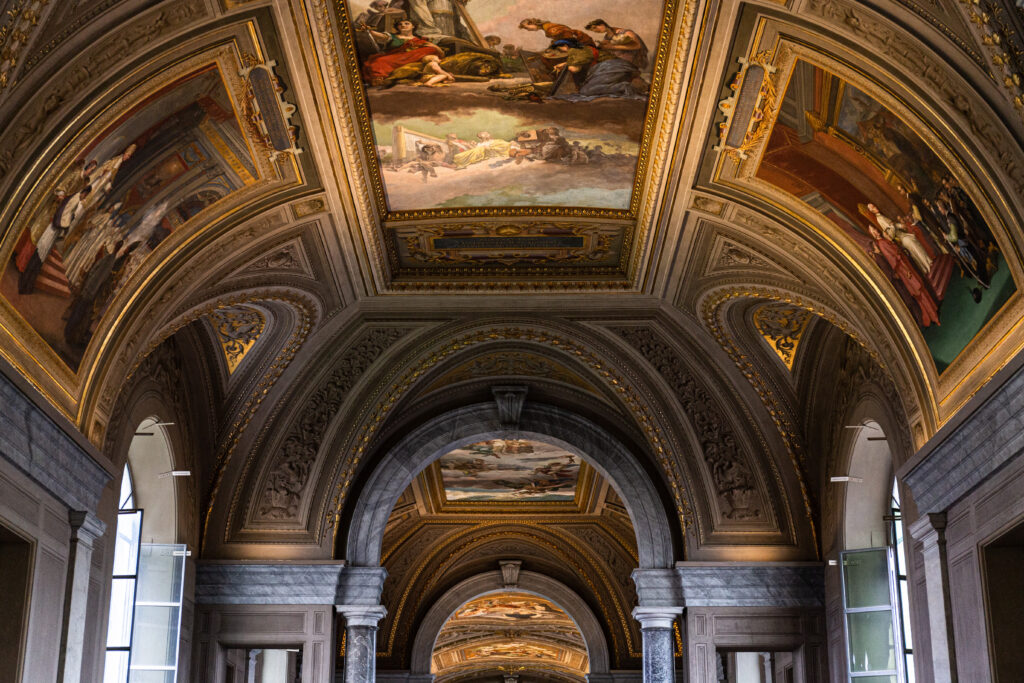
Inside Vatican Museums, the approach is more immersive. Their 360° tours allow you to stand beneath the ceiling of the Sistine Chapel and look around freely. Without crowds or time limits, details emerge that are often missed in person.
In Rijksmuseum, the emphasis shifts from space to detail. Its Rijksstudio platform lets you zoom into paintings at extreme resolution, examining brushstrokes, textures, and restoration work. It transforms viewing into analysis.
Meanwhile, the Museo del Prado offers a more traditional but deeply informative digital gallery. Here, the experience is guided by commentary, providing historical and artistic context alongside each work.
Beyond the major institutions
While famous museums dominate attention, smaller or more specialized spaces often provide equally compelling digital experiences.
The Dalí Theatre-Museum reflects the surrealism of its creator, offering glimpses into a space that feels as unconventional online as it does physically. Even limited virtual access captures its atmosphere.
The British Museum takes a different approach, combining object-based exploration with an interactive timeline. Instead of walking through rooms, you move through history itself, connecting artifacts across time and geography.
The Acropolis Museum blends storytelling with digital reconstruction, using 3D representations to contextualize ancient artifacts. It bridges the gap between static display and lived history.
Virtual sightseeing: what does it change?
Virtual access to museums does more than replicate physical visits. In some ways, it improves them.
There are no crowds, no time constraints, and no restricted viewpoints. You can pause, zoom, revisit, and compare. A single session might take you from Renaissance Italy to ancient Greece to modern surrealism, all within minutes.
More importantly, it removes barriers. Geography, cost, and accessibility no longer determine who can engage with cultural heritage. A student, a researcher, or a curious observer can access the same works that once required international travel.
For investigators and analysts, these platforms also offer subtle advantages. High-resolution imagery, metadata, and archived exhibitions can support research, authentication, or contextual understanding in ways that physical visits cannot.
The Internet as a cultural interface
Virtual museums reveal something deeper about the Internet. Beyond its noise, it can function as a structured, intentional space for preservation and exploration.
These platforms are not driven by algorithms or engagement metrics. They are designed to last, to document, and to educate. In that sense, they share the same philosophy as hidden libraries and archives, prioritizing longevity over visibility.
Exploring them requires a different mindset. You are not passively scrolling. You are actively navigating.
Will virtual sightseeing replace travel?
Virtual sightseeing is not a replacement for physical travel, and it is not meant to be. It is its own form of exploration, more deliberate, and often more detailed.
For those willing to look beyond the surface, the Internet offers access to the world’s greatest museums in ways that are both immediate and deeply immersive.