










He was a Puerto Rican kid, nothing more than an unemployed systems administrator from the Lower East Side of New York, raising two young nieces on his own. Online, he was known as Sabu, the anarchic prophet of Anonymous, the loudest voice of digital dissent. His real name? Héctor Xavier Monsegur. He is the person who brought down Anonymous from within.
Who is Héctor Monsegur (aka Sabu)
Born in 1983 in New York, Héctor Monsegur started his hacking activities with politically motivated acts, such as insulting or defacing sites over the US Navy bombing in Vieques, Puerto Rico, and credit card or fraud-type hacking.
For the legions of hacktivists who gathered in IRC channels, Sabu quickly became a leader without a title. Charismatic, quick-witted, and technically gifted, he was part philosopher, part provocateur. He became part of the Anonymous group, where his presence gave shape to something resembling direction.
From Anonymous to LulzSec
By early 2011, Anonymous had already gained notoriety for its distributed denial-of-service (DDoS) attacks against PayPal, Visa, and MasterCard as retaliation for cutting off donations to WikiLeaks. The movement was loose, uncoordinated, and leaderless.
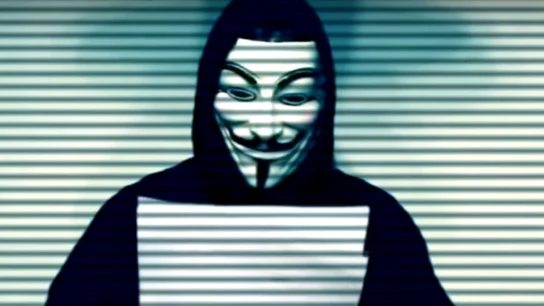
Indeed, Sabu didn’t lead in the traditional sense; he inspired. He founded LulzSec (Lulz Security), a splinter group born from Anonymous’s chaos but with a sharper edge and a taste for spectacle. Their motto was simple and self-mocking: “Laughing at your security since 2011.”
In the span of a few wild weeks, LulzSec hacked the CIA, Fox, Sony, and PBS, leaking gigabytes of data and mocking the incompetence of corporate cybersecurity. They defaced websites with memes, dumped passwords, and published manifestos mixing irony and ideology. Their operations were part prank, part protest.
At the center of it all was Sabu, the firestarter:
“We are doing God’s work here. Exposing corruption, making them fear us.”
Sabu
The capture
On June 7, 2011, as LulzSec celebrated another round of hacks, the FBI quietly knocked on Hector Monsegur’s apartment door in Manhattan. The digital outlaw who’d embarrassed global corporations was cornered by a simple misstep: a slip of his IP address.
The agents didn’t find a lavish hacker den, just a cluttered apartment, a single computer, and two children sleeping in the next room. Faced with a mountain of federal charges that could mean decades in prison, Monsegur made a decision that would change the course of hacktivism forever. He flipped.
Operation Double Agent
The FBI offered him a deal: cooperation in exchange for leniency. Within hours, Sabu, the loudest voice in Anonymous, had become a confidential informant.
For nearly a year, he continued operating as if nothing had changed. To his online comrades, he was still Sabu, spouting anti-corporate rhetoric and coordinating hacks. But behind the scenes, his IRC channels were now being monitored by federal agents in real time.
It was one of the most audacious infiltration operations in cybercrime history. Using Sabu’s access, the FBI unmasked and arrested several key figures of LulzSec and AntiSec, including Jake Davis (Topiary), Ryan Ackroyd (Kayla), and Jeremy Hammond, one of Anonymous’s most skilled hackers.
When the trap was sprung in March 2012, the Anonymous world imploded. The hacker who once preached digital rebellion had become the government’s inside man.
The betrayal
In the years that followed, Sabu’s decision was dissected endlessly by journalists, hackers, and ethicists alike. Was he a traitor, or a father protecting his family? A pawn of the system, or a pragmatist who realized the revolution was unsustainable?
He once told The Guardian:
“They gave me a choice: my family, my kids, or the movement. What would you choose?"
Sabu
For Monsegur, cooperation was survival. And yet, the consequences were seismic. Anonymous fractured. Trust — the rarest currency in online movements — evaporated. Every masked avatar on IRC became a potential informant. The mythology of Anonymous, the faceless legion, suddenly looked very human and very vulnerable.
The reinvention
After two years of quiet cooperation, Monsegur was sentenced in 2014. He faced a potential 124 years in prison, but due to what prosecutors called “extraordinary cooperation,” he was released after time served: just seven months behind bars.
Since then, he’s tried to reinvent himself as a cybersecurity consultant, speaking about the dangers of online radicalization, social engineering, and government overreach. To some, he’s a reformed hacker who understands both sides of the firewall. To others, he’s an irredeemable snitch whose betrayal marked the end of an era.
From Lulz to cyberwar
The fall of Sabu and LulzSec symbolized the end of a certain kind of hacktivism: spontaneous, chaotic, theatrical.
In its place rose a more structured world: nation-state actors, ransomware cartels, cyber-mercenaries. The lulz were replaced by profit, espionage, and geopolitics.
Sabu’s cooperation helped the FBI prevent hundreds of attacks, by his own account. But it also sent a message to every online collective: the system is always watching.
Hector Monsegur today
Hector Monsegur still lives in New York. He keeps a lower profile now, consulting on the same vulnerabilities he once exploited.