











A small plastic whistle, the kind tucked into a cereal box as a novelty, should not have had the power to reshape computing culture. Yet for John Draper, it became the key that unlocked an entire hidden world. Better known as Captain Crunch, Draper became one of the earliest figures to probe communication networks with a mixture of ingenuity and persistence. His story opens a window into how modern cybersecurity culture emerged from experimentation with analogue systems.
Who is John Draper?
John Thomas Draper was born in 1943 in the United States, in California. His early years were shaped by both mobility and discipline. His father served in the military and the family moved frequently, which exposed Draper to different environments and encouraged a degree of self-reliance. He also served in the Air Force as a radar technician. That experience introduced him to electronics, signal processing, and the logic of communication systems, which turned out to be the skills he later used in phone phreaking.
Draper was drawn to electronics long before the computing era. He built radio equipment, experimented with transmitters, and participated in amateur radio communities. He held an amateur radio licence, which helped him build the foundation needed to understand how analogue networks behaved in practice. Radio culture in the 1960s was a place where people freely shared knowledge, worked on homemade solutions, and approached problems experimentally. Draper often described those years as the origin of his curiosity about systems.
From radios to telephone systems
His shift from radio to telephony happened when he met members of the blind phone phreaking community. Many blind youth in the 1960s learned the acoustic patterns of telephone networks by ear, because they had unusually strong auditory perception and few accessible forms of entertainment or education. They taught Draper about signalling tones, routing tricks, and the structure of AT&T’s long-distance switching network.
Hacking systems with a whistle
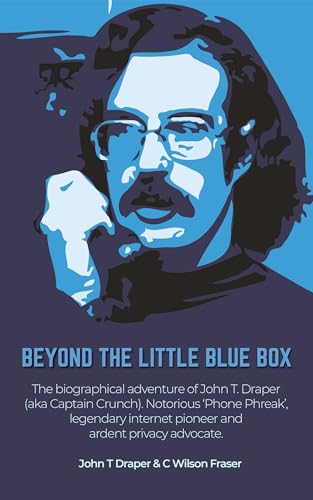
During the late 1960s, Draper learned that networks operated by AT&T used a specific tone, 2600 hertz, to signal that a long-distance line was free. The whistle included in a Cap’n Crunch cereal box happened to produce a very similar frequency. When blown into a phone handset, it could control the line by mimicking system tones.
Draper and other phone phreaks built custom devices that could generate these tones reliably. The activity was not legal, but it revealed how networks could be manipulated simply by understanding how signals flowed through them.
This curiosity-driven approach echoed later in digital hacking. Many of the early enthusiasts were not motivated by financial gain; they were simply testing system boundaries in a world where few people understood how the technology worked.
From phone systems to computers
People who met Draper often described him as introverted, analytical, and intensely focused when he worked on technical problems. He held unconventional views and followed his own path, which contributed both to his creative successes and to conflicts later in life.
He became well-known in Bay Area engineering circles during the transition from phone phreaking to early personal computing. As personal computers became accessible, Draper moved into software development, where his understanding of hardware and systems made him a valuable contributor.
The influence on early personal computing
In the mid 1970s and early 1980s, Draper wrote early software tools, most notably EasyWriter for the Apple II and later for the IBM PC. The Apple II version was among the first word processors available for the platform.
Draper also consulted for technology companies, attended Homebrew Computer Club meetings, and interacted with people like Steve Wozniak (co-founder of Apple), who has openly said that Draper influenced his early thinking about how systems could be understood and manipulated.
A complicated legacy
Draper faced several convictions for phone phreaking during the 1970s. Later in life, his reputation became mixed due to further legal troubles unrelated to technology. Some early colleagues distanced themselves from him, and public perception shifted as allegations accumulated.
Despite this, Draper remains a figure who helped define the earliest forms of network exploration. His work exposed weaknesses in telecom systems, influenced future innovators, and documented a time when the boundaries of technology were still informal and undefined.
Draper demonstrated that technical breakthroughs often originate from unexpected sources. A toy whistle became a diagnostic tool. Curiosity turned into a method. A small community of experimenters developed the foundations of modern hacker culture.