The mystery of the identity of Satoshi Nakamoto is one of the most compelling enigmas in tech history. Satoshi is a mythic figure, almost like the crypto world’s own Banksy. His disappearance has become an ossession to many digital investigators, and not even AI has been able to analyze the clues that he has left behind.
Who is Satoshi Nakamoto?
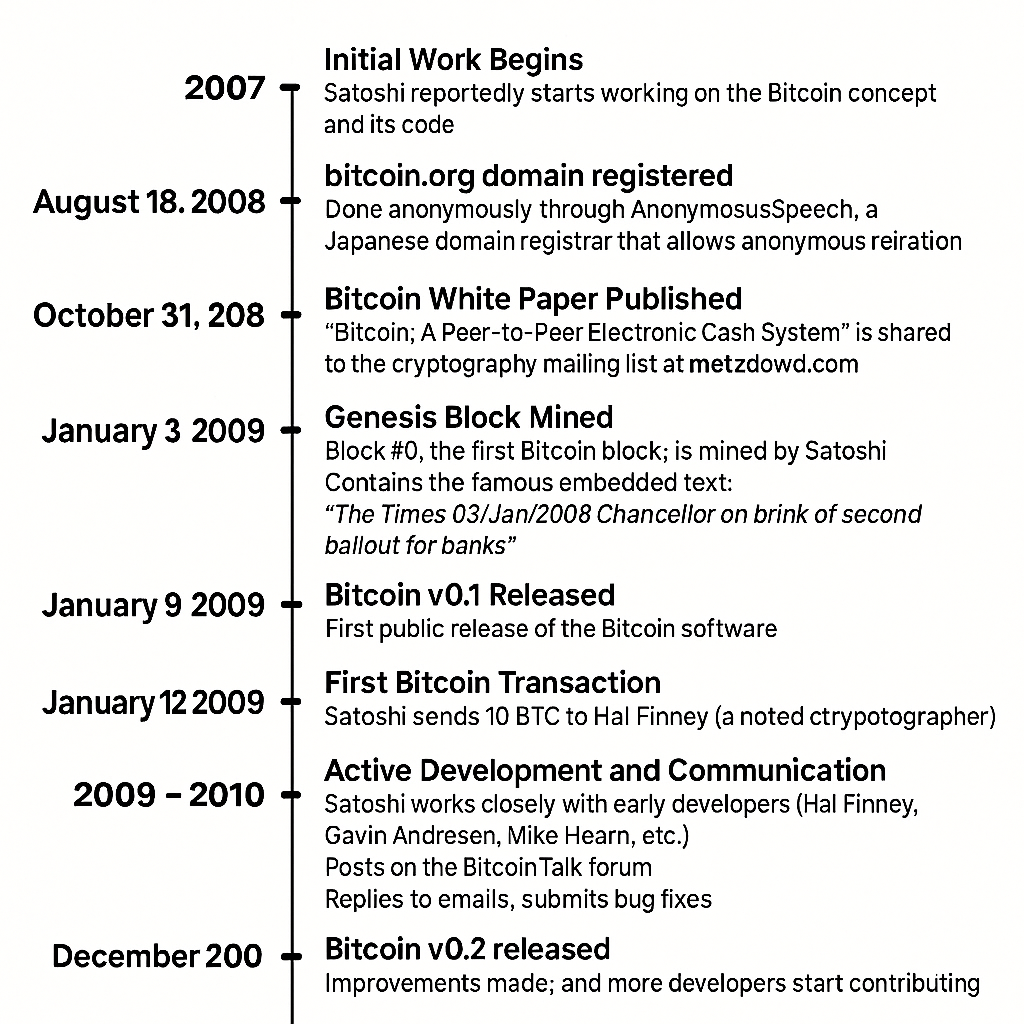
Satoshi Nakamoto is the pseudonymous creator of Bitcoin. He (or they) introduced it in a white paper titled “Bitcoin: A Peer-to-Peer Electronic Cash System” published on October 31, 2008.
Satoshi was active in the Bitcoincommunity from 2008 to 2010, communicating via email and forums. In April 2011, they sent a final message: “I’ve moved on to other things.” Then, they disappeared.
What did Satoshi Nakamoto do?
What we know is that he wrote the original Bitcoin white paper, created the Bitcoin software, and mined the first block (known as the Genesis block).
Satoshi sent early communications and updates to developers and is estimated to have mined over 1 million bitcoins, worth around 65 billion USD.
In July 2010, Satoshi’s last public post appeared on BitcoinTalk, and in December of the same year, he stepped back from the project leadership. He disappeared after his final email on April 26.
Clues about his identity
The only clues around his identity revolve around observing his work and messages. Between 2011 and 2013, Cypherpunk mailing list members and cryptography forums started analyzing any known activity of Nakamoto:
Writing style: he speaks fluent English, with some British spelling (e.g., “favour”, “colour”). His writing is formal, analytical, with a preference for clarity over showmanship.
Time Zone Analysis: His activity patterns suggest that they lived in a UK or US Eastern time zone. Little to no activity during certain hours align with sleeping hours in that zone.
Technical knowledge: They show deep expertise in cryptography, economics, and C++ programming.
Major suspects
Over the years, several people have been suspected of being Satoshi Nakamoto. However, they all proved to be wrong.
In 2014, Newsweek magazine claimed that Dorian Nakamoto was Satoshi in a highly controversial piece. Between 2015 and 2016, Craig Wright claimed to be Satoshi, backed briefly by the media and some in the Bitcoin community.
Nick Szabo
Creator of “Bit Gold” (a Bitcoin precursor), Szabo is a brilliant cryptographer with a similar writing style. He denies being Satoshi.
Hal Finney
Finney was the first recipient of a Bitcoin transaction from Satoshi. He was an early developer and strong privacy advocate. He
lived in the same town as Dorian Nakamoto.
He denied being Satoshi before passing away in 2014.
Dorian Nakamoto
Dorian Nakamoto is a Japanese-American man mistakenly identified by Newsweek in 2014. He strongly denied any involvement, and it was likely a red herring.
Craig Wright
Craig Wright is an Australian computer scientist who claims to be Satoshi.
He presented questionable evidence and failed cryptographic challenges. He is widely regarded in the crypto community as not credible.
In 2019, Wright was involved in legal battles in Florida, claiming ownership of 1 million BTC. In 2023, AI was used to analyze authorship: Large Language Models (LLMs) were utilized for stylometry. The results are still inconclusive, but Szabo and Finney often came up as close matches.
In December 2024, the British High Court sentenced Wright to 12 months in prison, finding him guilty of five counts of contempt. His series of lawsuits and appeals continues, earning him the nickname of Craig “Faketoshi” within the crypto community.
Why did Satoshi Nakamoto disappear?
Theories about Nakamoto’s disappearance include possible concerns about legal repercussions as Bitcoin gained traction or his desire to avoid a cult of personality. Some also speculate about his fear of centralization or becoming a target.
To date, despite the price surging past $60K at times, no BTC from the original wallets has been moved. Satoshi remains a symbol of decentralized, anonymous resistance to centralized control. Indeed, Bitcoin’s credibility is partly bolstered by the fact that its creator disappeared and there’s no “founder figure” to idolize or vilify.