











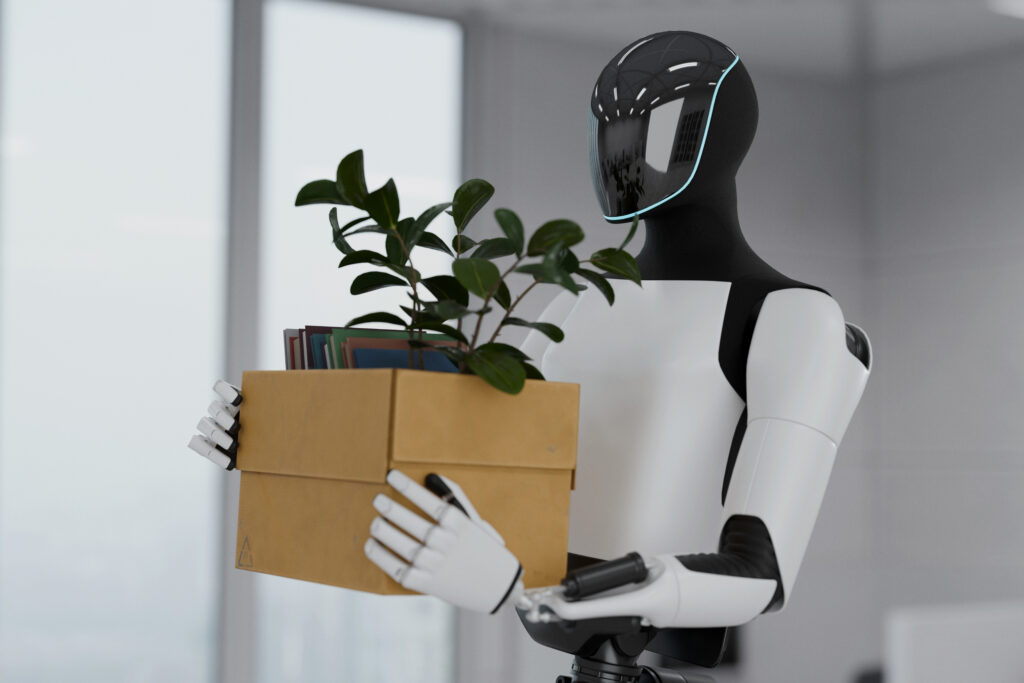
For decades, the word “robot” evoked a familiar image: a mechanical arm bolted to a factory floor, repeating the same motion with perfect precision. That image still exists, but it no longer defines the field. Today’s robots move through warehouses, assist in surgeries, navigate city streets, and even interact socially with humans. The shift is not just technological, it is conceptual.
A robot is no longer just a machine that moves. It is a system that senses, decides, and acts.
From automation to autonomy
Traditional industrial robots were designed for predictability. In automotive plants, for example, robotic arms perform welding or assembly tasks in tightly controlled environments. These machines follow pre-programmed instructions and rarely deviate from them.
Modern robotics moves closer to autonomy. Instead of repeating a fixed sequence, robots now interpret their surroundings and adjust in real time. This shift is driven by advances in sensors, computing power, and artificial intelligence.
Companies like Boston Dynamics demonstrate this evolution. Their robots can walk, balance, recover from disturbances, and adapt to uneven terrain, something unimaginable in earlier generations of industrial machines.
The core components of a modern robot
Despite the diversity of robots today, most share the same foundational architecture. Understanding these components helps clarify what makes a robot “intelligent” rather than merely automated.
Sensors: perceiving the world
Robots rely on sensors to gather data about their environment. Cameras, LiDAR, force sensors, and microphones allow machines to “see,” “feel,” and “hear.” Without sensors, a robot is effectively blind and incapable of adapting.
Actuators: taking action
Actuators are the muscles of a robot. These include motors, hydraulics, and pneumatic systems that enable movement. Whether it is a robotic arm assembling electronics or a humanoid walking, actuators translate decisions into motion.
Control systems: making decisions
At the core lies the control system, software that processes sensor data and determines how the robot should respond. This can range from simple rule-based logic to advanced AI models capable of learning from experience.
Robotics meet Artificial Intelligence
The integration of AI has fundamentally changed robotics. Earlier systems operated in structured environments because they lacked the ability to interpret uncertainty. Today, machine learning allows robots to recognize objects, predict outcomes, and refine their behaviour over time.
For example, warehouse robots no longer follow fixed paths. They dynamically reroute around obstacles, optimize picking strategies, and coordinate with other machines. This blend of robotics and AI is what enables real-world deployment outside controlled factory settings.
However, this also introduces new risks. AI-driven systems can behave unpredictably, especially when exposed to environments that differ from their training data. In physical systems, unpredictability is not just a bug, it can become a safety issue.
Types of modern robots
The term “robot” now covers a wide spectrum of machines, each designed for specific environments and tasks.
- Industrial robots remain dominant in manufacturing, focused on precision and repetition
- Autonomous mobile robots (AMRs) navigate warehouses and logistics centres
- Service robots operate in public or commercial spaces, such as hotels or airports
- Medical robots assist surgeons and support rehabilitation
- Humanoid robots aim to replicate human movement and interaction
Companies like Agility Robotics are pushing humanoid designs into practical applications, particularly in logistics, where human-like movement can be advantageous in environments built for people.
Why a definition of a robot matters
As robots become more embedded in daily life, the definition itself becomes important. A robotic vacuum may seem trivial compared to a surgical robot, yet both rely on the same core principles of sensing, decision-making, and action.
The distinction between a “tool” and a “robot” increasingly depends on autonomy. The more a machine can interpret its environment and make independent decisions, the more it shifts into the realm of robotics.
This has implications beyond engineering. Regulation, liability, and cybersecurity all hinge on how autonomous a system is. A malfunctioning automated tool is one thing. A semi-autonomous system making decisions in real time introduces a different category of risk.
Beyond the factory floor
Robotics is no longer confined to controlled environments. It is moving into homes, hospitals, public infrastructure, and even personal relationships. This expansion forces a rethinking of how humans interact with machines.
Robots are becoming participants in environments rather than instruments within them. That transition, from passive tools to active agents, is what defines modern robotics.
Looking ahead
Understanding what a robot is today sets the foundation for everything that follows. The next step is to examine one of the most visible and controversial developments in the field, machines designed to look and move like us.
Next week, we explore the rise of humanoid robots, why companies are investing heavily in them, and whether they represent the future or a technological dead end.