











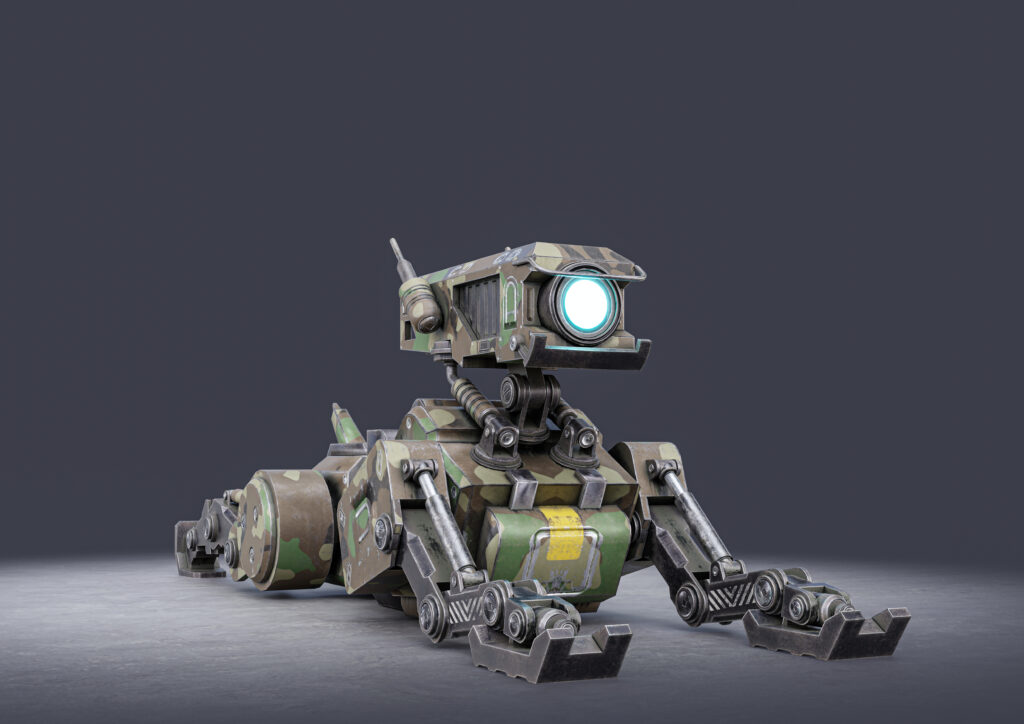
No robotics applications generate as much public attention, ethical debate, and geopolitical concern as their use in military and security operations. While service robots deliver meals and warehouse robots move inventory, military robots operate in environments where mistakes can have life-and-death consequences.
Using machines in wars
The use of machines in warfare is not new. Armies have always sought technological advantages, from longbows and artillery to aircraft and satellites. What is changing today is the level of autonomy available to those systems. Modern military robots are no longer merely remote-controlled tools. Increasingly, they are capable of navigating independently, identifying objects, tracking targets, and making limited operational decisions.
As artificial intelligence and robotics continue to converge, military organizations around the world are exploring how autonomous systems might reshape the battlefield, enhance security operations, and reduce risks to human personnel. At the same time, these technologies raise difficult questions about accountability, ethics, and the future of conflict itself.
The evolution of military robotics
Military robotics began primarily with remote-controlled systems designed to keep personnel out of danger. One of the earliest widespread uses involved explosive ordnance disposal (EOD) robots. These machines allowed operators to inspect and disarm suspicious devices from a safe distance.
Over time, military robotics expanded into:
- Aerial surveillance systems
- Ground reconnaissance vehicles
- Maritime drones
- Logistics support platforms
- Automated defence systems
What started as remote-controlled machinery gradually evolved into increasingly autonomous systems capable of operating with reduced human intervention. Today, military robotics encompasses land, sea, air, and even space-based applications.
Drones: the face of modern military robotics
No technology has become more closely associated with modern military robotics than unmanned aerial vehicles, commonly known as drones.
Initially developed for reconnaissance and surveillance, drones now perform a wide range of missions, including:
- Intelligence gathering
- Border monitoring
- Search and rescue
- Communications support
- Target acquisition
- Logistics delivery
Their ability to remain airborne for extended periods while collecting real-time information has transformed military planning and situational awareness.
Drones also illustrate how rapidly robotic technologies can evolve. Systems that once required highly trained operators increasingly incorporate artificial intelligence capable of assisting with navigation, object detection, and mission planning.
However, the growing role of autonomy in military drones remains a subject of intense international debate.
Ground robots on the battlefield
While aerial systems receive significant attention, ground-based military robots continue to advance rapidly. These machines perform tasks such as:
- Reconnaissance
- Explosive disposal
- Supply transport
- Casualty evacuation
- Perimeter security
Robotic ground vehicles can operate in environments that are hazardous or inaccessible to human personnel.
Future systems may take on expanded roles, particularly in logistics operations where moving equipment, supplies, and ammunition often places soldiers at considerable risk.
The military value of these systems lies less in replacing combat personnel and more in reducing exposure to dangerous situations.
Robotics in security operations
Outside of military environments, robotics is increasingly used in civilian security applications. Organizations deploy robotic systems for:
- Facility patrols
- Perimeter monitoring
- Environmental sensing
- Infrastructure inspection
- Situational awareness
Security robots may operate at airports, ports, industrial facilities, campuses, and critical infrastructure sites. These systems can provide continuous monitoring and generate alerts when unusual conditions are detected.
Supporters argue that robotic security systems improve coverage and efficiency. Critics point to concerns about surveillance, privacy, and the potential for misuse.
As with many technologies, the impact depends heavily on how the systems are governed and deployed.
The promise of reduced human risk
One of the strongest arguments in favour of military robotics is the potential to reduce human casualties.
Robots can enter dangerous environments without risking human lives. They can inspect suspicious packages, operate in contaminated areas, and perform reconnaissance missions under hostile conditions.
In theory, this capability allows organizations to:
- Reduce exposure to hazards
- Improve operational effectiveness
- Enhance situational awareness
- Protect personnel during high-risk missions
For many military planners, these benefits provide a compelling justification for continued investment in robotic systems. Yet reducing risk for one side does not eliminate the broader ethical questions surrounding their use.
The autonomy debate
Perhaps the most contentious issue in military robotics concerns autonomy. Most current systems still involve significant human oversight. Operators monitor missions, approve actions, and retain ultimate responsibility for critical decisions.
Advances in artificial intelligence, however, are making greater autonomy technically feasible. The central question becomes: how much decision-making should be delegated to machines?
Supporters of increased autonomy argue that machines may react faster, process more information, and operate more effectively in certain environments. Critics counter that machines lack human judgment, moral reasoning, and contextual understanding.
The prospect of systems capable of independently selecting or engaging targets remains one of the most controversial topics in international security discussions.
Accountability and responsibility
- The operator
- The commanding officer
- The software developer
- The manufacturer
- The organization deploying the system
As systems become more autonomous, assigning responsibility becomes increasingly difficult. Legal frameworks have struggled to keep pace with technological developments, leaving many questions unresolved.
Cybersecurity on the battlefield
Modern military and security robots are essentially networked computers with physical capabilities. This creates significant cybersecurity concerns.
Potential threats include:
- Unauthorized access
- Signal interception
- Communications disruption
- Sensor manipulation
- Software compromise
Unlike traditional cyberattacks, successful compromises of robotic systems can produce immediate physical consequences.
A compromised surveillance drone may provide false information. A disrupted logistics system may affect operational readiness. A manipulated robotic platform could potentially create safety hazards for friendly personnel.
Cybersecurity is therefore becoming a core component of military robotics rather than a secondary consideration.
The arm race of algorithms
Throughout history, military competition has driven technological innovation. Artificial intelligence and robotics are now becoming part of that pattern.
Nations around the world are investing heavily in autonomous systems, AI-assisted decision support, robotic logistics platforms, swarm technologies, and advanced surveillance capabilities. This competition is often described as an emerging race for technological superiority.
Unlike traditional arms races, however, software and algorithms play a central role. The decisive advantage may not come from larger platforms but from better data, more effective AI models, and faster decision-making systems.
Ethical questions that remain unanswered
Military robotics forces society to confront questions that extend beyond engineering.
Can machines be trusted in situations involving human life? Should autonomous systems be allowed to make lethal decisions? How should accountability be assigned when decisions are made by algorithms? Can international agreements effectively regulate rapidly evolving technologies?
These questions remain unresolved, and the answers will likely shape the future of military robotics for decades to come.
Military and security robotics reveal both the power and the complexity of autonomous systems. They demonstrate how robotics can enhance safety, improve operational capabilities, and reduce human exposure to danger. At the same time, they expose difficult ethical, legal, and cybersecurity challenges that society is only beginning to address.