











Service robots are increasingly appearing in hotels, airports, shopping centres, hospitals, restaurants, and even private homes. Unlike industrial robots, which typically operate behind barriers and out of public view, service robots interact directly with people. They answer questions, deliver items, clean floors, provide directions, and perform a growing range of everyday tasks.
Their presence represents one of the most visible shifts in modern robotics. Yet despite impressive technological advances, service robots have experienced mixed success. Some have become indispensable tools, while others have struggled to move beyond novelty.
What is a service robot?
A service robot is generally defined as a robot that performs useful tasks for humans outside of traditional industrial automation.
Unlike factory robots that focus on manufacturing, service robots operate in environments designed primarily for people. This means they must navigate unpredictable surroundings, interact with the public, and adapt to changing conditions.
Examples include:
The defining characteristic is that they provide a service directly or indirectly to people in everyday environments.
The rise of consumer robotics
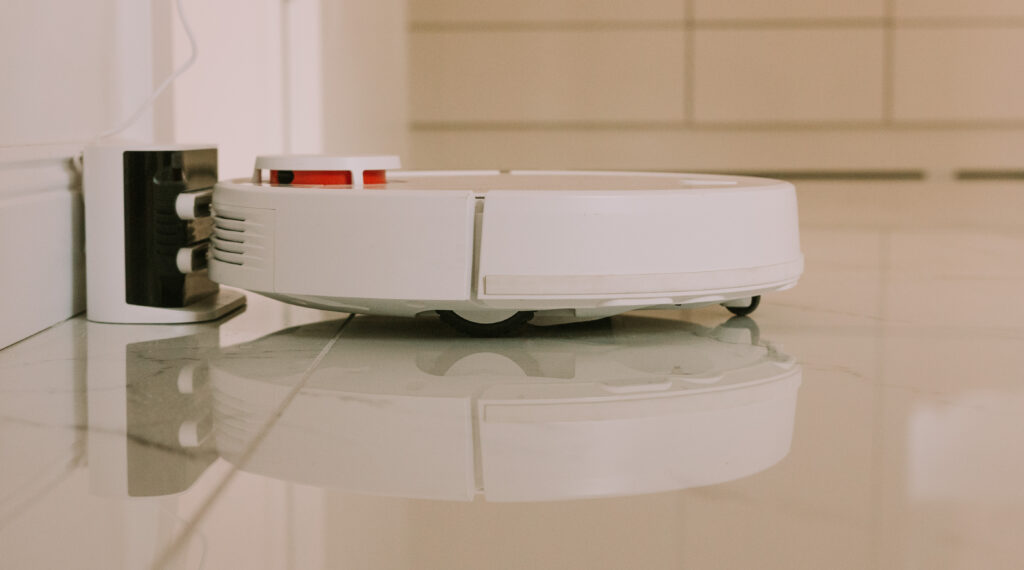
The most successful service robots are often the ones people barely notice. Robotic vacuum cleaners are among the most widely adopted robots in history. Millions of households now use autonomous cleaning devices that navigate rooms, avoid obstacles, and return to charging stations without human intervention.
Their success stems from solving a simple, clearly defined problem. Unlike many ambitious robotic projects, robotic vacuums do not attempt to replicate human intelligence. They perform a specific task reasonably well and provide a clear benefit to users.
This principle, focusing on narrow, practical applications, has become a recurring theme in successful service robotics.
Robots in hotels and hospitality
Hotels around the world have experimented with service robots in recent years. Some robots deliver towels, toiletries, and room service items directly to guest rooms. Others provide information, assist with check-in procedures, or guide visitors through facilities.
For hotel operators, robots offer several potential advantages:
- Reduced labor costs
- Twenty-four-hour availability
- Consistent service delivery
- Novel guest experiences
However, reality has often proven more complicated.
Guests may enjoy interacting with robots occasionally, but many still prefer human assistance when dealing with complex requests or unexpected problems. A robot can deliver a toothbrush, but it struggles to handle nuanced customer service situations. As a result, many hospitality deployments focus on supporting staff rather than replacing them.
Restaurants and food service
Restaurants have become another testing ground for service robotics. In some establishments, robots transport meals from kitchens to dining areas. Others assist with food preparation, inventory management, or dish handling.
These systems can help address staffing shortages and reduce repetitive physical labour. Yet food service presents unique challenges.
Restaurants are highly dynamic environments filled with moving customers, changing layouts, spills, and unexpected obstacles. Human servers routinely adapt to situations that remain difficult for robotic systems. Consequently, most restaurant robots function as assistants rather than autonomous replacements for staff.
Airports and public spaces
Large public environments such as airports offer attractive opportunities for robotics.
Airports often deploy robots to:
- Provide deirections
- Answer common questions
- Patrol facilities
- Monitor environmental conditions
- Assist with customer service
Unlike traditional information kiosks, mobile robots can move throughout facilities and engage directly with travellers.
For organizations managing large public spaces, robots can help extend services without requiring additional personnel at every location. However, public environments are among the most difficult settings for robotics. The constant movement and unpredictability of people create challenges that do not exist in controlled industrial spaces.
Security and surveillance robots
Security robots represent one of the fastest-growing categories of service robotics. These systems patrol parking lots, campuses, warehouses, and commercial properties while collecting data through cameras, sensors, and environmental monitoring equipment.
Potential functions include:
- Intrusion detection
- Perimeter monitoring
- Environmental hazard detection
- Incident documentation
- Situational awareness
Supporters argue that robots can enhance security coverage and allow human personnel to focus on higher-priority tasks. Critics raise concerns about surveillance, privacy, and the collection of large amounts of public data.
As with many robotic technologies, the debate often centres on how the systems are deployed rather than the technology itself.
Why some service robots fail
Despite significant investment, many service robotics projects struggle to achieve long-term success. Several common factors contribute to these failures.
- The novelty problem
A robot may attract attention initially because it is new and unusual. However, novelty wears off. Organizations quickly discover that a robot must provide ongoing practical value rather than simply entertain customers.
- Environmental complexity
Human environments are messy. Children run unexpectedly through hallways. Furniture gets moved. Spills occur. Lighting changes. Crowds form unpredictably. Many robots perform well under ideal conditions but struggle when confronted with the complexity of real-world environments.
- Cost and maintenance
Robots require maintenance, software updates, repairs, and technical support. In some cases, the operational costs exceed the benefits they provide. A human employee may ultimately prove more flexible and cost-effective than a sophisticated robotic system.
- Human expectations
The human-robot interaction challenge
One of the most important aspects of service robotics is not engineering but psychology. How people perceive and interact with robots often determines whether deployments succeed.
Research has shown that users may trust robots too much or distrust robots unnecessarily. They might also assign human characteristics to machines and develop emotional attachments to robotic systems.
Designers must carefully balance functionality, appearance, and user expectations. A robot that appears too machine-like may feel intimidating. One that appears too human-like may trigger discomfort or unrealistic expectations.
Finding the right balance remains one of the most challenging aspects of service robotics.
The cybersecurity dimension
As service robots become connected devices, they also become potential targets.
Many robots rely on:
- Wireless communication
- Cloud services
- Mobile applications
- Remote management platforms
Each connection creates a potential attack surface. A compromised service robot could expose sensitive data, disrupt operations, or potentially be manipulated to behave in unintended ways.
For organizations deploying service robots, cybersecurity must be considered alongside physical safety and operational effectiveness.
The robot is not merely a machine. It is a networked computer capable of interacting with the physical world.
The future of service robotics
Service robotics continues to evolve rapidly. Advances in artificial intelligence, computer vision, navigation systems, and natural language processing are making robots more capable and adaptable.
Future developments may include:
- More sophisticated customer interaction
- Improved autonomous navigation
- Better integration with smart buildings
- Enhanced personalization of services
- Greater collaboration between humans and robots
The most successful systems will likely be those that complement human capabilities rather than attempt to replace them entirely.
In many environments, the future is not human versus robot. It is human and robot working together.
Looking ahead
Service robots represent one of the most visible examples of robotics entering everyday life. Their successes and failures reveal an important lesson: technological capability alone is not enough. For robots to succeed in public spaces, they must fit into human environments, human expectations, and human social norms.