











It started as a petty online argument between gamers, but it ended with an innocent man dead. In December 2017, a single phone call made by Tyler Raj Barriss, a 25-year-old from Los Angeles, set off a chain of events that would redefine how seriously law enforcement treats swatting.
What is swatting?
- Swatting is the act of making a fake emergency call to provoke a police raid on someone’s home.
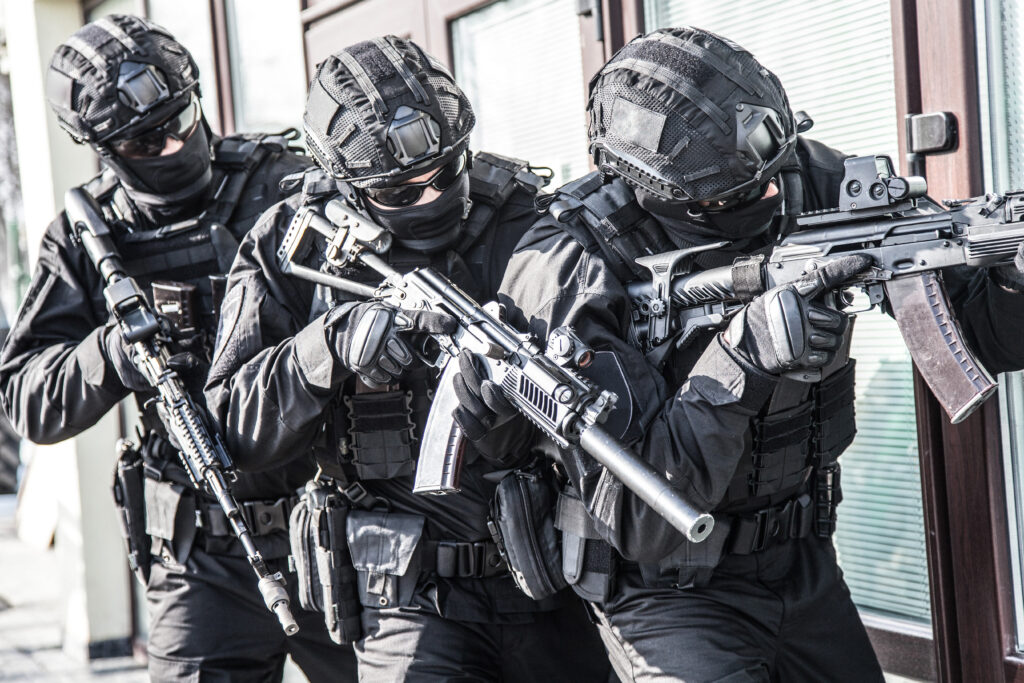
Swatting is a dangerous and illegal form of cyber harassment. The goal is to provoke a heavy law enforcement response, often involving a SWAT team, which is trained for high-risk scenarios.
This act originated within online gaming communities, particularly targeting players of games like Call of Duty, Counter-Strike, and DOTA, and has evolved from a perceived prank into a serious crime.
Crimes connected to swatting
Swatting perpetrators, often referred to as “swatters,” typically commit other connected crimes to pull off the call:
- Doxxing: these are techniques to obtain the victim's personal information, such as their home address.
- Social engineering and reconnaissance: if the victim's address cannot be obtained with doxxing, the information is tracked through social engineering, public records, or tracking the victim's IP address.
- Spoofing and anonymization techniques: these are used to mask the caller ID and identity to make the call to the police appear to come from a local number, incresing the likelihood of a swift and aggressive response.
- Live-streaming: the incident is often live-streamed by the victim (who is connected to the game), turning the traumatic event into entertainment for viewers.
What happened
The incident began over a $1.50 wager in an online “Call of Duty: WWII” match. Two players (Casey Viner and Shane Gaskill) had an argument after losing a game. Viner dared another player to “swat” Gaskill, providing what he thought was his home address in Wichita, Kansas. The address was wrong.
Viner contacted Tyler Barriss, known online as “SWAuTistic”, who had a reputation for making fake bomb threats and emergency calls for attention. On December 28, 2017, Barriss called Wichita police, claiming he had shot his father, was holding his mother and brother hostage, and had poured gasoline throughout the house.
Police arrived at the address, which belonged not to Gaskill but to Andrew Finch, a 28-year-old father of two who had no connection to the gamers. When Finch stepped outside, confused by the commotion, an officer mistakenly shot and killed him.
The fallout
The case sparked national outrage. Barriss was arrested in Los Angeles the next day.
His call had been traced through VoIP and social media handles, linking him to dozens of prior hoax threats, including false bomb reports against schools, universities, and even the FBI headquarters.
In 2019, Barriss pleaded guilty to 51 federal charges, including making false reports resulting in death, cyberstalking, and conspiracy to make threats across state lines. He was sentenced to 20 years in federal prison, one of the harshest sentences ever given for swatting.
Viner (the gamer who recruited Barriss) and Gaskill (who gave the wrong address) were also charged: Viner received a 15-month prison sentence and a two-year gaming ban; Gaskill cooperated with authorities and received probation.
The role of social media
Barriss’s swatting “services” had been advertised and celebrated in certain toxic corners of Twitter, Discord, and gaming forums. He posted about his exploits in real time, even bragging about bomb threats to schools and threatening celebrities.
Platforms later deleted his accounts, but the amplification effect of social media had already given him notoriety. The case exposed how cyber harassment ecosystems can normalize criminal behaviour through peer validation and anonymity.
The psychology behind swatting
Swatting is often driven by status-seeking, revenge, or entertainment. It blends narcissism and digital dissociation, the feeling that online actions have no real-world consequences.
Experts describe it as a performative crime:
Swatting isn’t just about targeting someone; it’s about showing off to the community that you can manipulate real-world systems.
Dr. Justin Patchin, co-director of the Cyberbullying Research Center
The Tyler Barriss case shattered that illusion. For the first time, a swatter faced decades in prison, establishing a precedent that online crimes can — and will — be prosecuted like physical ones.
Law enforcement changes
After the Wichita tragedy, law enforcement agencies across the U.S. revised emergency response protocols for handling anonymous calls that might be swatting attempts.
- 911 systems began integrating caller verification tools and flagging repeat false-reporting numbers.
- The FBI's Cyber Division launched a task force on swatting and online threats.
- Gaming platforms partnered with the Anti-Defamation League and Fair Play Alliance to educate users on reporting online harassment.
The human cost
Andrew Finch’s family filed a wrongful death lawsuit against the city of Wichita, arguing that the officer’s response was excessive and that police lacked adequate training for swatting scenarios. The city settled in 2022 for $5 million USD, acknowledging the systemic failures that contributed to Finch’s death.
For many, this tragedy became a symbol of how far digital cruelty can reach. A phone call made thousands of kilometres away, over a video game dispute, led to a man’s death on his own doorstep.
The Tyler Barriss case wasn’t an isolated event. It was a turning point. It forced society to confront how virtual aggression can spill into physical violence, and how the infrastructure of digital communication can be weaponized in seconds.
The Netflix Documentary
The Tyler Barriss case was covered by an episode of the Netflix docu-series “Web of Make Believe: Death, Lies, and the Internet” (episode: “Death by SWAT.”)