











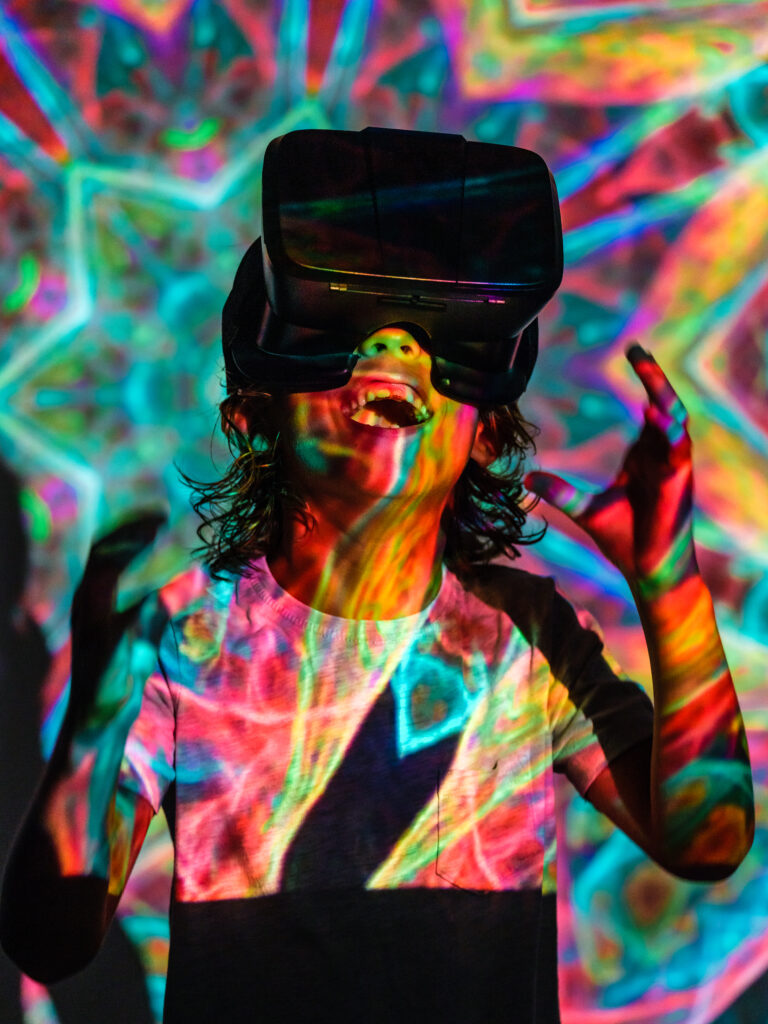
If you could start your life from scratch and have a chance at success, would you consider living in a digital world? Virtual reality and alternative persistent worlds blur the line between role-play gaming, simulation, and real-world social systems. They embed virtual economies that allow players to compete fairly, they allow people to reinvent their identity, the way they look and dress, and even their partners and love interests. No wonder millions of people are attracted to them. However, virtual worlds are complex environments. They hide dangers and can lead people down a slippery slope.
Hope without critical thinking is naïveté
Since the dawn of time, hope has been the motor to accomplish big things and achieve unthinkable results. However, people with low resources and big hopes are also a primary target of individuals with questionable motives. Those who believe that anything is possible, those who are the most motivated in succeeding, are more likely to believe that good things will come if they take chances.
And what better chance than the Internet to believe in incredible possibilities to come true? Digital worlds are the perfect example of a promised land where everyone can start over and have a second chance at life.
The road to digital worlds
- In 2003, Second Life debuted as a sandboxed 3D virtual world. It featured a real-life-based economy and fully customizable avatars. It was a commercial success, with users cashing out millions of dollars annually and generating a substantial virtual economy.
- In 2006, Roblox introduced the concept of user-generated content (UGC) reality with a game and metaverse hybrid model. Roblox integrated a real-money economic system oriented to youth.
- In 2017, VRChat, a social VR platform, offered an extremely fluid avatar identity that appealed to many even without a built-in economy.
- In 2020, block-chained metaverses such as Decentraland and The Sandbox linked cryptocurrency wallets to users' identity, bringinmg token and NFT-based economies into the game.
- In 2021, Meta's Horizon Worlds started to build a virtual environment that can be accessed with a Facebook identity and Hocolus devices, integrating social VR with a beta version of the Metaverse, based on the Meta Pay.
What is Second Life?
Second Life is considered the “proto-Metaverse.” It’s a 3D virtual world, not a game — no quests or goals, just open creation. Users (called Residents) build homes, run businesses, attend concerts, and teach classes. Second Life’s currency is the Linden Dollar (L$), which is cash convertible (L$250 ≈ 1 USD).
With its real-world money-making capabilities, Second Life allows Residents to buy and sell virtual real estate and rent “land.” A typical Second Life case study is the story of a US woman who earned a six-figure income renting out virtual real estate during the 2000s.
Second Life also had businesses trading in clothing and fashion design for avatars, custom animations, and objects or scripts. It even allowed for hosting events, adult work (which was notoriously part of its economy), educational institutions such as universities and spaces for corporate conferences.
On a psychological level, Second Life is a key case study in Turkle’s “second self” theory. One of the biggest attractions for users was its behavioural freedom tied to the avatar’s anonymity, which promoted a disinhibition effect. These features also promoted Second Life in role-play therapy, which is used in psychology and rehab programs.
The Decline of Second Life
- Second Life has a steep learning curve and has a clunky interface. It is unintuitive for new users, and avatar customization was overwhelming. Unlike MMORPGs, Second Life had no quests, no direction, no tutorial loop — which confused casual users. Furthermore, it requires creativity: most people log in to play, not to build 3D models or script in LSL (Linden Scripting Language). Ultimately, Second Life created a digital divide between builders and browsers.
- Second Life has several technical limitations: when it was launched, it had high system requirements in an era of GPU power. It provided a laggy experience, especially in busy areas opf the virtual world. The platform also has a poor support for users. Finally, while it was visually 3D, it never made the leap into immersive tech that later platforms like VRChat or Meta tried.
- Second Life has several technical limitations: when it was launched, it had high system requirements in an era of GPU power. It provided a laggy experience, especially in busy areas opf the virtual world. The platform also has a poor support for users. Finally, while it was visually 3D, it never made the leap into immersive tech that later platforms like VRChat or Meta tried.
Other factors further contributed to the fall of Second Life: from the failure to evolve to its overcommercialization to promote its spaces to big brands. Ultimately, the space lacked purpose and cohesion: users logged in alone and logged out alone. While it offered incredible freedom, it required users to generate their own value, which most aren’t equipped to do. This is how the space gained the nickname of “Second Boredom.”
Finally, the widespread presence of cybersex and adult content, virtual property fraud and disputes, in-world gambling and reports of underage roleplay led to the abandonment of sponsors and investors. Today, Second Life survives as a niche space for creators to earn money, and a space for therapists, artists, and musicians in virtual events. Academics and anthropologists also continue to use Second Life as a way to study virtual societies.
Meta's Horizon World: A second take at Virtual Worlds
Meta’s Horizon World and the Metaverse are Facebook’s attempts at a more successful and purposeful unified social virtual reality space. The Metaverse is marketed for remote collaboration, socialization, gaming and virtual commerce. Its concept builds on Zuckerberg’s idea that a verified identity equals trust.
The two key factors that could make the Metaverse successful are:
Meta already owns your friends, photos, likes, chats — that’s social capital Second Life never had.
People are more likely to join a virtual space where their real-world network already exists.
The Metaverse is still at an early stage of development, and it’s tied to Meta’s wallet ecosystem. Despite the technical and conceptual improvements, the Metaverse is already experiencing problems with moderation, harassment, and a lack of stickiness.
Why the Metaverse might still fail
Meta’s Metaverse has some critical weaknesses:
- Facebook’s tight control over the user and their identities is the antithesis of an open metaverse.
- Users already distrust Meta’s privacy handling and behaviour tracking.
- As of now, Horizon Worlds lacks the community and creativity of Second Life.
- Not everyone owns or wants a VR headset.
- Avatars and graphics are bland. Users say they feel sterile and “corporate”.
The Metaverse critics say that Meta is building a mall, not a society.
To succeed, the Metaverse must balance creativity with usability, and freedom with safety — something neither Second Life nor Meta has fully solved.
The ideal Virtual World
Is an ideal Virtual World even possible? How do you create a space that accommodates everyone’s wishes?
We have asked AI to draft a blueprint for the ideal Virtual World, and this is the answer:
- Users need clear goals, with structured tutorials and achievement trees. The world needs onboarding quests tailored by interest to prevent early abandonment and respect different playing styles (i.e., Explorer vs. Builder vs. Social vs. Creator modes).
- It must allow for flexible identities with verified trust layers: allow freedom of expression with optional identity verification to build trust without sacrificing anonymity. It should also allow for identity layers: use aliases for art and play, and a real ID for work and sales.
- The world must feel alive and co-owned — not just branded and pre-built. It must feature an economy where players can build, sell, and rent goods and land. It must have changing resources, regions evolve — like a game but community-run. It must have events, such as layer-generated festivals, auctions, PvP matches, conferences... And it should also allow creators to write code for experiences (safe sandboxing).
- Access to the platform should be multi-device, from desktop, mobile, or optional VR for a more immersive experience. VR should enhance — not gatekeep — the experience.
- The virtual world should feature built-in safety, consent and moderation tools to prevent the chaos of early Second Life and VRChat without killing freedom.
- It should have a fair, transparent virtual economy that rewards contribution while protecting against exploitation and laundering. The ideal system should have an in-world currency backed by clear rates and secure wallets, optionla NFT or asset ownership (only if tied to utility and not speculation), and allow users to build, host, teach, entertain. It should also feature a creator revenue sharing system, similar to YouTube's monetization.
- The metaverse isn’t one platform — it’s a network of them. Be the “WordPress,” not the AOL. It should be based on interoperativity and open standards, with avatars working across the world, portable assets owned by the user, and integrate thiord-party tools.
Finally, the optimal virtual world should be designed with a solid psychological blueprint for the happiness of its users and ensure long-term engagement: it should nurture mastery, belonging, status, creativity, and novelty. The optimal virtual world should satisfy players’ psychological needs without resorting to predatory addiction loops.
A virtual world for real needs
This blueprint might depict a world where humans can find the happiness and opportunities they cannot find in real life. This could be a world that makes us forget about our real troubles. But wouldn’t this perfect world be worth achieving in real life?