






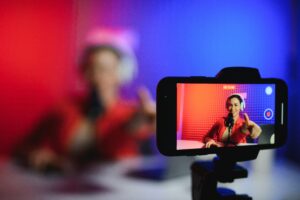




Social media has become one of the most powerful forces shaping how people see themselves. It influences identity, self-worth, appearance, success, and even reality itself. Unlike traditional media, which presented curated images from a distance, social platforms blur the line between observer and participant. People are no longer just consuming content, they are producing it, measuring its impact, and comparing themselves to others in real time.
This constant loop of creation, feedback, and comparison has a profound effect on self-perception.
The mirror that talks back
In the offline world, self-perception develops gradually through relationships, experiences, and personal reflection. Social media accelerates and externalizes this process.
Profiles, posts, and stories act as digital representations of identity. Each image, caption, or update becomes a statement about who someone is, or who they want to be perceived as. What makes this different from earlier forms of self-expression is the immediacy of feedback.
Likes, comments, shares, and views transform identity into something that can be measured. Approval becomes visible, countable, and comparable.
This creates a subtle shift. Instead of asking, “Who am I?”, people begin to ask, “How am I being received?”
The comparison engine
Social media platforms are built to highlight the most engaging content. In practice, this often means users are exposed to idealized versions of other people’s lives.
Carefully selected photos, achievements, travel, fitness, and curated lifestyles create an environment where comparison becomes almost unavoidable.
This leads to what psychologists call upward social comparison, where individuals compare themselves to those they perceive as more successful, attractive, or fulfilled.
Over time, repeated exposure to these idealized snapshots can produce:
- Feelings of inadequacy
- Distorted perceptions of normal life
- Pressure to perform or present a certain image
- Anxiety around personal milestones and achievements
Importantly, people are not comparing their full lives to others’ full lives. They are comparing their everyday reality to someone else’s highlight reel.
The performance of identity
Social media encourages a form of identity that is not just expressed, but performed.
Users learn, often unconsciously, what kinds of content generate engagement. Certain aesthetics, opinions, or behaviours are rewarded with visibility and approval, while others are ignored.
This can lead to:
- Self-censorship
- Identity shaping based on audience expectations
- Pressure to maintain a consistent “personal brand”
- Difficulty separating authentic identity from curated persona
For some, this performance becomes exhausting. Maintaining an online identity requires ongoing effort, attention, and emotional investment.
Validation and the feedback loop
The feedback systems embedded in social media platforms are not neutral. They are designed to keep users engaged. Each notification can reinforce behaviour. A well-performing post may encourage similar content in the future, while a lack of engagement can create self-doubt or disappointment.
This dynamic can shift motivation from intrinsic to extrinsic. Instead of sharing content for personal satisfaction or expression, users may begin to seek validation through metrics. Over time, self-worth can become tied, even partially, to digital feedback.
This does not happen to everyone, but when it does, it can lead to:
- Heightened sensitivity to online reactions
- Mood fluctuations based on engagement levels
- Compulsive checking behaviours
- Anxiety about posting or being ignored
Filters, editing, and reality distortion
Modern social media tools make it easy to alter appearance, environment, and even body shape. Filters, editing apps, and AI enhancements can subtly or dramatically change how someone looks.
While these tools can be creative and fun, they also contribute to shifting standards of appearance.
When edited images become the norm, unedited reality may begin to feel inadequate. This can affect body image, confidence, and self-esteem, particularly among younger users.
The issue is not only deception, but normalization. When everyone appears flawless, imperfections begin to feel like failures rather than natural human traits.
Vulnerable groups and amplified effects
Although social media affects most users to some degree, certain groups are more vulnerable to its psychological impact.
Adolescents and young adults are still forming their identities, making them more sensitive to external validation and comparison. Influencers and content creators may also experience increased pressure due to the need to maintain engagement and visibility.
Individuals already experiencing anxiety, depression, or low self-esteem may find that social media intensifies these feelings.
The same platforms that offer connection and expression can also amplify insecurity and self-doubt.
Reclaiming self-perception
Understanding how social media shapes perception is the first step toward using it more consciously. Some practical approaches include:
- Curating feeds to include diverse and realistic content
- Limiting time spent on platforms that trigger negative comparison
- Being mindful of emotional responses while scrolling
- Separating self-worth from online metrics
- Engaging more with content that informs or inspires rather than pressures
It is not necessary to disconnect entirely. Instead, the goal is to shift from passive consumption to intentional use.
A digital identity, not a definition
Social media offers tools for expression, connection, and creativity. However, it also introduces systems that can distort how people see themselves.
A profile is not a person. A post is not a life. Metrics are not measures of worth.
Maintaining this distinction becomes essential in a world where identity is constantly being shaped, reflected, and evaluated through digital platforms.
If you need to investigate online behaviour, identify harmful digital patterns, or assess digital risks, Negative PID offers cybersecurity and OSINT investigation services. Learn more at https://negativepid.com.