











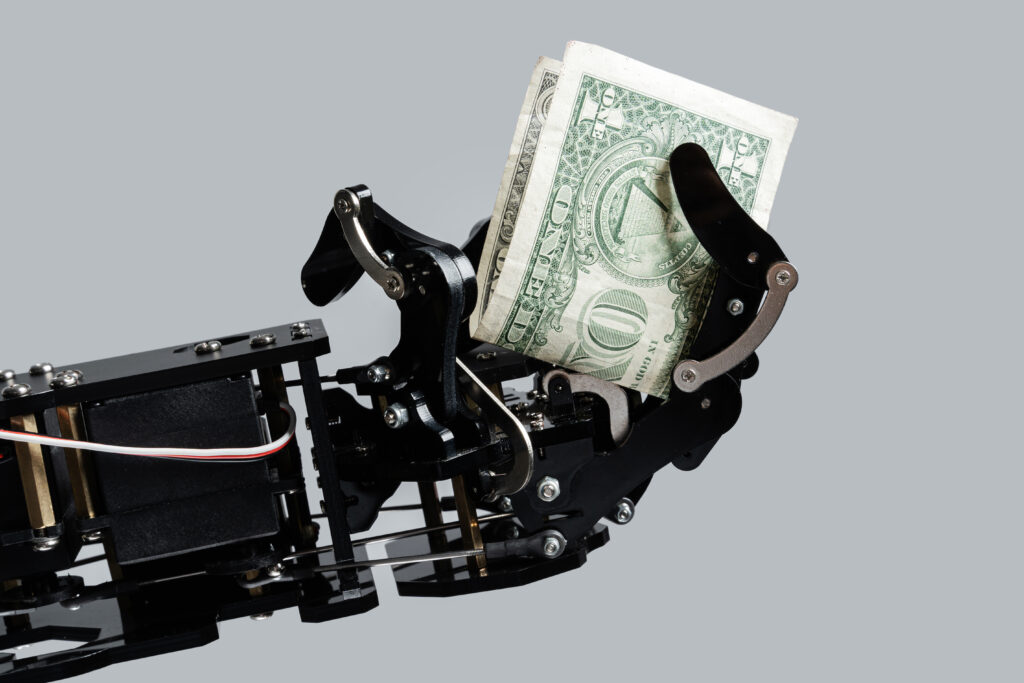
Are robots worth the investment?
A robot may be innovative, impressive, and technically capable, but if it cannot deliver measurable value, it is unlikely to survive beyond pilot projects and demonstration environments. For every successful robotic deployment that transforms an industry, countless others struggle with cost overruns, integration challenges, maintenance issues, or unrealistic expectations.
This gap between technological promise and economic reality explains why some robotics companies become industry leaders while others disappear despite possessing remarkable technology.
The future of robotics depends as much on economics as it does on engineering.
The business case for robotics
Organizations invest in robotics for several reasons. Common objectives include:
- Reducing labour costs
- Increasing productivity
- Improving quality
- Enhancing workplace safety
- Addressing labour shortages
- Scaling operations
- Operating continuously
In theory, robots offer an attractive proposition. A machine does not require vacations, sick leave, shift changes, or overtime pay. It can perform repetitive tasks with consistent precision and operate around the clock.
From a financial perspective, replacing recurring labour expenses with a one-time capital investment can appear highly attractive. The reality, however, is considerably more complicated.
The true cost of a robot
When people discuss robotics costs, they often focus on the purchase price. That is usually only the beginning. A robotic deployment may involve:
- Hardware acquisition
- Software licensing
- Facility modifications
- Networking infrastructure
- Sensors and peripherals
- Integration services
- Employee training
- Maintenance contracts
- Cybersecurity controls
A robot that appears affordable on paper can become significantly more expensive once all supporting requirements are considered.
In many projects, the robot itself represents only a fraction of the total investment. Organizations frequently underestimate the cost of creating an environment where the robot can operate effectively.
Capital expenditure vs Operating expenditure
One reason robotics can be attractive to businesses is the shift from ongoing labour costs to capital investment. Traditional staffing models typically involve recurring expenses that continue indefinitely. Robotic systems often require significant upfront investment but lower operational costs over time. This creates a trade-off.
Organizations must accept higher initial expenditures in exchange for potential long-term savings. The challenge is that those savings may take years to materialize. For smaller organizations with limited resources, the upfront cost can be difficult to justify, even when long-term benefits appear promising.
This economic reality helps explain why large enterprises often adopt robotics sooner than small businesses.
The ROI calculation
Return on investment, or ROI, is the metric that ultimately determines whether a robotics project succeeds financially. Calculating ROI involves more than comparing labour costs against equipment costs.
Organizations must also consider:
- Productivity environment
- Error deduction
- Downtime impact
- Maintenance requirements
- Equipment lifespan
- Training expenses
- Operational felxibility
A robot that reduces labour costs but creates frequent production interruptions may ultimately deliver poor returns. Likewise, a robot that increases throughput significantly may justify a substantial investment even if labour savings are modest.
The most successful robotics deployments typically solve a clearly defined business problem rather than pursuing automation for its own sake.
Why many robotics projects fail to scale
The robotics industry has produced countless impressive demonstrations. Many never progress beyond pilot programs.
Scaling robotics is often much harder than building a working prototype. Several factors contribute to this challenge.
Controlled demonstration vs operational reality
A robot may perform exceptionally well in a carefully controlled environment. Real-world operations introduce variability. Products change. Layouts evolve. Environmental conditions shift. Human behaviour remains unpredictable. The system that worked perfectly in a demonstration may struggle once deployed at scale.
Customization problems
Many robotic solutions are highly customized. What works for one facility may require substantial modification elsewhere. Excessive customization increases deployment costs and limits scalability. Companies often discover that building one successful robotic installation is much easier than deploying hundreds.
Integration complexity
Robots rarely operate in isolation. They must interact with enterprise software, inventory systems, manufacturing platforms, cloud services, and operational technology environments. Integration frequently becomes one of the largest and most expensive components of a robotics project. A technically capable robot may still fail if it cannot function effectively within existing workflows.
The hidden costs
Public discussions often focus on acquisition costs while overlooking ongoing operational expenses. Some of the most significant hidden costs include:
Maintenance
Robots are physical machines. Motors wear out. Sensors require calibration. Batteries degrade. Components fail. Maintenance programs require both time and specialized expertise. Organizations frequently underestimate these long-term obligations.
Downtime
When robotic systems fail, operations may be disrupted. Unexpected downtime can eliminate anticipated productivity gains and create significant financial losses. Reliability often proves more valuable than advanced functionality.
Cybersecurity
Modern robots are connected devices. Protecting them requires security monitoring, patch management, access controls, network segmentation, and vulnerability assessments. These requirements introduce ongoing costs that are often absent from initial business cases.
Workforce adaptation
Employees require training to operate, maintain, and supervise robotic systems. Organizations may need to hire new personnel with specialized technical skills. The transition costs associated with workforce adaptation are frequently underestimated.
The startup challenge
The robotics industry has attracted enormous investment over the past two decades. Hundreds of startups have emerged with ambitious visions of transforming industries through automation. Many have failed.
The reasons are often economic rather than technical. Robotics startups face unique challenges:
- High research and development costs
- Long product development cycles
- Expensive hardware manufacturing
- Complex customer deployments
- Slow sales processes
Unlike software companies, robotics firms cannot scale instantly through digital distribution. Every deployment involves physical products, logistics, installation, and support.
This creates significant barriers to growth. As a result, many promising robotics startups struggle to achieve profitability even when their technology performs well.
Why industrial giants often win
Large industrial companies possess advantages that startups frequently lack. These include established customer relationships, global support networks, manufacturing capacity, financial resources, and long-term service capabilities.
When organizations invest millions of dollars in automation, they often prioritize stability and support over innovation alone. A customer may choose a less advanced solution from a trusted supplier rather than a more capable product from an unproven startup. This dynamic explains why established industrial firms continue to dominate many sectors of the robotics market.
Innovation may originate with startups, but large-scale adoption often favours organizations capable of supporting deployments for years or decades.
Robotics as a competitive necessity
In some industries, more than ROI, the question is whether companies can remain competitive without it. Warehousing offers a useful example.
As leading organizations automate portions of their operations, competitors face pressure to match improvements in speed, efficiency, and cost. Over time, automation may shift from being a competitive advantage to becoming a baseline requirement. This pattern has appeared repeatedly throughout technological history.
The organizations that fail to adapt often find themselves at a disadvantage.
The future economics of robotics
Several trends are gradually improving the economics of robotics. These include:
- Lower sensor costs
- Improved artificial intelligence
- Better battery technology
- Cloud-based robotics platforms
- Robotics-as-a-Service business model
- Standardized integratioon franmeworks
Rather than purchasing expensive systems outright, some organizations now subscribe to robotic services through recurring contracts. This approach reduces upfront investment and makes automation accessible to a wider range of businesses.
As technology matures, economic barriers are likely to decline. The challenge will be ensuring that operational complexity decreases at the same pace.
Beyond the hype
The robotics industry often alternates between periods of excitement and disappointment. New technologies generate enthusiasm, attract investment, and produce ambitious forecasts. Reality eventually intervenes, revealing practical limitations and economic constraints.
This cycle is not unique to robotics. What distinguishes successful robotic deployments is not technological sophistication alone but the ability to deliver measurable value over time. The robots that transform industries are rarely the most impressive demonstrations.
They are the systems that solve real problems reliably, repeatedly, and economically.
Technological capabilities vs economic success
The economics of robotics reveals an important truth: technological capability does not guarantee commercial success. Cost, maintenance, scalability, integration, and operational reliability often determine whether a robotic system thrives or disappears.
As robotics becomes more affordable and accessible, economic considerations will remain just as important as technical innovation.