











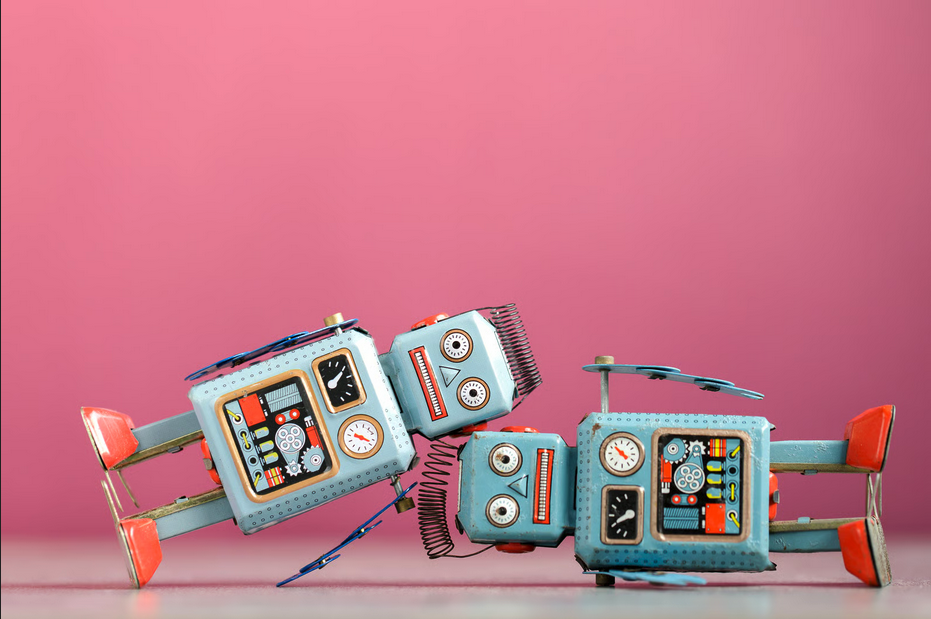
Robotics is often presented through carefully produced demonstrations. Videos show humanoid robots performing acrobatic movements, autonomous vehicles navigating city streets, and warehouse robots moving seamlessly through complex environments. These demonstrations are impressive and often represent genuine technological achievements.
What they rarely show are the failures.
What could go wrong?
Like every technology, robots malfunction. Sensors fail. Software contains bugs. Mechanical components wear out. Artificial intelligence misinterprets information. Networks go offline. Batteries deplete unexpectedly. Human operators make mistakes.
When a spreadsheet crashes, the consequences are usually limited to lost time and frustration. When a robot fails, the consequences can include damaged equipment, interrupted operations, financial losses, injuries, or worse. Understanding robotics requires looking beyond success stories and examining what happens when machines encounter reality.
Failure is not the exception in robotics. It is an expected part of operating complex systems in an unpredictable world.
Why robots fail
Every robot is a combination of hardware, software, sensors, communications systems, and human-designed processes. Each component introduces potential points of failure.
Common causes include:
- Mechanical defects
- Software bugs
- Sensor malfunctions
- Communication failures
- Environmental conditions
- Human error
- Cybersecurity incidents
In many cases, failures occur not because a single component breaks, but because multiple small issues combine in unexpected ways. Complex systems rarely fail for simple reasons.
The difference between lab and reality
One of the biggest challenges in robotics is the transition from controlled environments to real-world conditions. In laboratories and testing facilities, variables can be managed. Lighting is predictable. Obstacles are known. Weather is controlled. Human behaviour is limited.
The real world offers no such guarantees. A robot deployed in public may encounter poor lighting, rain or snow, unexpected obstacles, network interruptions, unusual human behaviour, or damaged infrastructure.
Conditions that seem trivial to humans can create significant challenges for robotic systems. This gap between testing and deployment remains one of the most persistent obstacles in robotics.
Sensor problems: when robots misunderstand reality
Robots perceive the world through sensors. Cameras, LiDAR systems, radar, microphones, GPS receivers, and other devices provide the information required for decision-making. If that information is incorrect, the robot’s understanding of reality becomes distorted.
Consider a simple example. A human can often recognize that a shadow is not a physical obstacle. A robot relying on sensor data may struggle to make the same distinction under certain conditions.
Sensor failures can result from dirt or debris, environmental interference, hardware defects, calibration errors, or extreme weather.
Software bugs: the invisible threat
Software is the nervous system of modern robotics. Even relatively simple robots may rely on millions of lines of code. The more complex the system, the greater the likelihood that defects exist somewhere within it.
Software bugs can cause navigation errors, unintended movements, system crashes, incorrect calculations, and communication failures. Many bugs remain hidden until unusual circumstances expose them.
This is one reason why robotic systems undergo extensive testing before deployment. Unfortunately, no amount of testing can anticipate every possible situation. The real world has an endless capacity to generate unexpected scenarios.
Artificial Intelligence and unexpected behaviour
The introduction of artificial intelligence has created new categories of failure. Traditional software generally behaves according to explicit rules defined by programmers. AI systems operate differently.
Machine learning models identify patterns and make predictions based on training data. This creates flexibility but also introduces uncertainty. An AI-powered robot may perform exceptionally well in familiar situations while behaving unpredictably when encountering something it has never seen before.
Researchers often refer to these situations as edge cases. The problem is that real-world environments contain countless edge cases. Humans handle many of them effortlessly. Machines often do not.
Mechanical failures still matter
While software and AI receive significant attention, robotics remains fundamentally physical.
Motors wear out. Bearings fail. Hydraulic systems leak. Batteries degrade. Joints loosen. Mechanical reliability remains one of the most important factors determining whether a robot succeeds commercially.
A robot may possess exceptional intelligence, but if it cannot operate reliably day after day, organizations are unlikely to trust it with critical tasks. In many industries, reliability matters more than innovation. A simple robot that works consistently often provides more value than a sophisticated robot that fails unpredictably.
Human error and misuse
Not every robotic failure originates with the robot itself. Humans remain involved in nearly every stage of a robotic system’s lifecycle.
People design systems, configure software, maintain hardware, interpret data, and supervise operations. Mistakes can occur at any point. Incorrect configurations, inadequate training, poor maintenance, or unrealistic expectations frequently contribute to incidents attributed to robots.
In many investigations, the root cause turns out to be a combination of technological and human factors. This highlights an important reality. Robotics is rarely about replacing humans entirely. It is about managing interactions between humans and machines.
The cybersecurity problem
Modern robots are increasingly connected to networks, cloud platforms, mobile applications, and operational systems. Every connection creates a potential attack surface.
Cybersecurity failures can affect robotics in several ways:
- Unauthorized access
- Manipulation of sensor data
- Denial-of-service attacks
- Remote control compromise
- Environmental conditions
- Data theft
- Software tampering
The automation myth
Popular discussions sometimes portray robotics as a path toward flawless automation. Reality is considerably messier.
Automation does not eliminate problems. It often changes their nature. Organizations may discover that new maintenance requirements emerge over time, and specialized expertise becomes necessary. Or system integration proves difficult and unexpected failures occur. And most of all, human oversight remains essential.
Many successful robotic deployments still rely heavily on human monitoring and intervention. The image of fully autonomous systems operating indefinitely without supervision remains more aspiration than reality in most industries.
Learning from failure
Failures are not always signs of weakness. In engineering, failures often provide valuable information. Many advances in robotics emerge directly from studying incidents and unexpected behaviours.
When systems fail, engineers gain insights into design weaknesses, software limitations, human-machine interactions, environmental challenges, and security vulnerabilities.
The goal is not to eliminate every failure, which is impossible. It is to build systems that fail safely, recover quickly, and improve continuously. This principle has become increasingly important as robots enter environments shared with humans.
Trust and public perception
High-profile failures often receive disproportionate attention. A single incident involving a robot may generate significant media coverage, even if millions of successful operations occur without issue. This affects public perception.
Trust in robotics is influenced not only by actual performance but also by how failures are understood and communicated. Organizations deploying robotic systems must recognize that transparency matters.
People are generally willing to accept that technologies fail occasionally. They are less willing to accept failures that appear hidden, unexplained, or avoidable. Trust is built not through perfection, but through accountability.
The reality check
Perhaps the most important lesson is that robotics is neither magical nor infallible. Robots are tools created by humans. They inherit human strengths and human limitations.
They can improve efficiency, enhance safety, and perform remarkable tasks. They can also malfunction, misinterpret information, and create unexpected consequences.
Recognizing both sides of that reality is essential for understanding the future of robotics. The most successful organizations are often not those that assume robots will never fail. They are the ones that plan for failure from the beginning.
Looking ahead
Failures reveal the true complexity of robotics. They remind us that intelligent machines are not simply products, but intricate systems operating at the intersection of hardware, software, data, and human decision-making.
Understanding these limitations provides a foundation for evaluating the broader economic realities of robotics.