











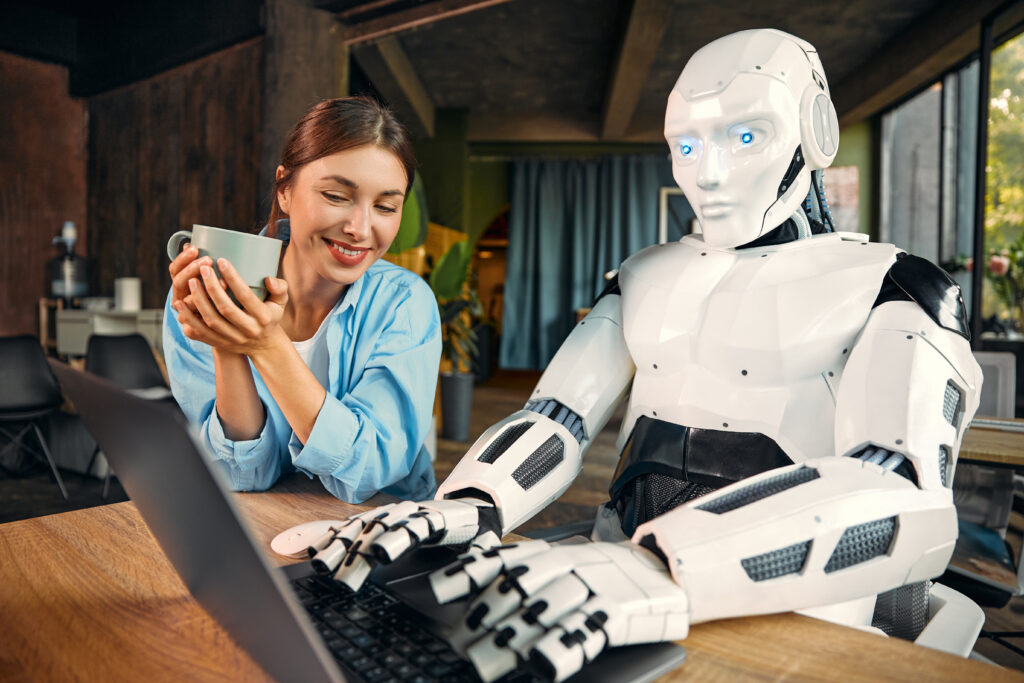
For decades, the ultimate vision of robotics has remained remarkably consistent. Not factory robots. Not robotic vacuum cleaners. Not warehouse automation systems. The dream has always been the general-purpose robot, a machine capable of performing a wide range of tasks in the same way humans can.
A robot that can clean a house, carry groceries, assist the elderly, prepare meals, perform repairs, learn new skills, and adapt to unfamiliar situations without extensive reprogramming. In other words, a robot that functions less like a machine and more like a versatile assistant.
This vision has appeared in science fiction for generations. It is now becoming a serious engineering objective. Advances in artificial intelligence, sensors, batteries, computer vision, and robotics have convinced many researchers and technology companies that general-purpose robots may finally be achievable.
Progress is being made: but how close are we, really?
The dream of the universal robot
Most robots today are specialists. A warehouse robot moves inventory. A surgical robot assists with operations. A robotic vacuum cleans floors. Each system is optimized for a specific task and environment.
Humans, by contrast, are generalists. A person can move from cooking dinner to fixing a shelf, helping a child with homework, carrying groceries, and navigating an unfamiliar building without needing entirely new programming. This flexibility is what makes human labour so valuable.
The ultimate goal of general-purpose robotics is to replicate at least some of that versatility. A successful general-purpose robot would dramatically expand the range of environments where automation becomes practical.
Instead of building a different robot for every task, organizations could deploy adaptable systems capable of learning and performing multiple roles. The economic implications would be enormous.
Why humanoid robots are attracting attention
Many organizations pursuing general-purpose robotics have focused on humanoid designs. At first glance, this may seem unnecessary. After all, humans are not always the most efficient shape for a machine. Wheels often outperform legs. Specialized robotic arms frequently outperform human hands.
Yet humanoid robots offer a unique advantage. Human environments are already designed for human bodies. Buildings, tools, vehicles, staircases, door handles, kitchens, warehouses, and workplaces all assume roughly human dimensions and capabilities.
A humanoid robot can potentially operate within existing infrastructure without requiring extensive redesign. This is one reason companies are investing heavily in machines that resemble people, not because human form is inherently superior, but because human environments are everywhere.
The technical barriers remain enourmous
Despite impressive demonstrations, general-purpose robotics remains one of the most difficult engineering challenges ever attempted.
The public often sees robots walking, dancing, carrying objects, or performing carefully scripted tasks. What remains less visible are the countless problems that engineers continue to struggle with.
Many of the most difficult challenges have not yet been fully solved.
Energy: the battery problems
One of the largest obstacles is energy. Humans are remarkably efficient. A person can remain active for an entire day while consuming relatively modest amounts of energy.
Robots are far less efficient. Walking, balancing, lifting, computing, sensing, and communicating all require power. Modern batteries remain one of the limiting factors in robotics. A robot may possess advanced capabilities, but those capabilities become less useful if the machine requires frequent charging or cannot operate for extended periods.
Battery technology continues to improve, but progress is often slower than advances in software and artificial intelligence. The result is a growing imbalance between what robots can theoretically do and how long they can sustain those activities.
Dexterity: hands are hard
Humans often underestimate the complexity of their own hands. Simple actions such as tying shoelaces, folding laundry, picking up fragile objects, using tools, or opening containers, require extraordinary levels of coordination, touch sensitivity, and control.
Robotic hands have improved significantly, yet human dexterity remains difficult to replicate. Many tasks that appear trivial to people remain challenging for machines. A robot may be capable of lifting a heavy box but struggle to manipulate a thin plastic bag. It may open a door reliably yet fail to button a shirt.
Dexterity remains one of the largest gaps between robotic capability and human performance.
Reasoning and common sense
Artificial intelligence has dramatically improved a robot’s ability to interpret information and make decisions. However, reasoning remains a significant challenge.
Humans constantly apply common sense. We understand that wet floors may be slippery, glass objects can break, children behave unpredictably, furniture may be moved, and that instructions often contain ambiguity. Most of this knowledge is rarely stated explicitly. People acquire it through experience.
Robots must somehow learn or infer similar concepts. This remains one of the most difficult problems in both robotics and artificial intelligence. Machines can perform impressive tasks yet still struggle with situations that humans handle intuitively.
The challenge of generalization
A robot may perform exceptionally well in one environment and fail in another. This limitation is known as the generalization problem.
For example, a robot trained to organize one warehouse may struggle in a different warehouse. A household robot may perform well in one home and poorly in another. A service robot may adapt to one hotel but encounter difficulties elsewhere.
Humans transfer knowledge between environments naturally. Robots still face significant challenges in doing the same. True general-purpose capability requires robust generalization, something researchers continue to pursue.
The economic reality
Even if technical barriers are overcome, economics will remain important. A general-purpose robot must not only work. It must provide sufficient value to justify its cost.
Organizations evaluating robotic systems will ask: is it reliable? Is it safe? Is it affordable? Is it maintainable? Does it outperform existing alternatives?
History suggests that many technically impressive technologies fail because they cannot achieve economic viability. The future of robotics depends as much on business realities as engineering breakthroughs.
The next decade of robotics
Predictions about robotics often swing between extreme optimism and excessive skepticism. A more realistic outlook likely falls somewhere in between.
Over the next decade, we are likely to see:
More specialized intelligence
Robots will become increasingly capable within specific domains. Warehouses, healthcare facilities, manufacturing plants, logistics centres, and service environments will continue expanding automation.
Limited general-purpose systems
Early general-purpose robots will likely emerge in controlled commercial environments before appearing in homes. Factories, warehouses, and industrial facilities provide more predictable conditions than private residences.
Better human-robot collaboration
Many future systems will focus on working alongside people rather than replacing them entirely. Hybrid workflows will become increasingly common.
Improved mobility and dexterity
Walking, climbing, object manipulation, and environmental interaction will continue improving. However, human-level performance across all tasks remains unlikely in the near term.
Greater AI integration
Artificial intelligence will increasingly serve as the cognitive layer that connects perception, planning, and action. This may be the area of fastest progress.
What is unlikely in the near future
Popular media often portrays futures filled with autonomous household servants capable of performing nearly any task.
While such systems remain a long-term possibility, several realities suggest caution. Over the next decade, we are unlikely to see:
- Robots replacing most human workers
- Human-level general intelligence in robots
- Universal robotics assistants in every home
- Completely self-managing robotic societies
The technical, economic, regulatory, and social barriers remain substantial. Progress will almost certainly occur incrementally rather than through a single revolutionary breakthrough.
Beyond robotics
Perhaps the most important lesson from studying the future of robotics is that the technology itself is only part of the story. Robots do not exist in isolation.
Their impact depends on economics, regulation, cybersecurity, ethics, culture, and human behaviour. The future will not be determined solely by what robots can do. It will be shaped by what societies choose to do with them.
This distinction often matters more than the technology itself.
A future still to be written
The dream of the general-purpose robot remains one of humanity’s most ambitious engineering goals. Remarkable progress has been made, but significant challenges remain.
Robots are becoming more capable, more mobile, and more intelligent. Yet they continue to struggle with many tasks that humans perform effortlessly every day. The coming decade will likely bring substantial advances, but not the robotic revolution often depicted in science fiction.
Instead, we are likely to see a gradual expansion of robotics into more industries, more environments, and more aspects of daily life. The future of robotics is neither a utopia nor a dystopia.
It is an ongoing experiment in how humans and machines learn to coexist, collaborate, and shape the world together.