











When people think about robotics, they often imagine practical applications: factory automation, surgical systems, delivery robots, or humanoid assistants. Yet some of the most fascinating developments in robotics emerge not from industry or science, but from humanity’s endless capacity for experimentation.
Throughout history, humans have built machines to solve problems. Increasingly, however, we are also building machines to entertain, comfort, inspire, educate, perform rituals, and satisfy curiosity. Some robotic creations are useful. Others are artistic. Some seem bizarre, even absurd.
Collectively, they reveal something important. The weirdest robots often tell us less about technology and more about ourselves. They expose our hopes, fears, beliefs, and sometimes our willingness to blur the boundaries between the mechanical and the human.
When robots stop being tools
Most robots are designed with a practical objective. They assemble products, move goods, assist patients, or perform dangerous tasks. Their value is easy to measure. The robots featured in this article occupy a different category.
Their purpose may be:
- Emotional
- Social
- Cultural
- Religious
- Artistic
- Experimental
In many cases, their success cannot be measured through productivity or efficiency. Instead, they exist to provoke thought, create experiences, or explore questions about human-machine relationships.
Robot pets that are not pets
One of the earliest examples of unusual robotics involved robotic animals. Unlike industrial systems, robotic pets are designed primarily to evoke emotional responses.
Some mimic dogs, cats, seals, birds, or entirely fictional creatures. They react to touch, recognize voices, and display behaviours intended to encourage interaction.
What makes these robots interesting is not their technology but the emotional attachments they often inspire. People frequently treat robotic animals as if they possess personalities. They assign names, attribute emotions, and develop genuine affection toward machines that neither think nor feel.
The phenomenon demonstrates how readily humans form bonds with entities that display even limited signs of social behaviour. The relationship may be artificial, but the emotional response often is not.
The rise of robotic clergy
One of the most unexpected developments in recent years has been the appearance of robots in religious settings. Experimental robotic priests, monks, and spiritual guides have appeared in various countries as technological demonstrations or educational tools.
Some deliver blessings. Others recite scripture, answer questions, or provide information about religious teachings. These projects often generate strong reactions.
Supporters view them as innovative ways to engage younger generations and make information more accessible. Critics question whether spiritual guidance can meaningfully be delivered through machines.
The debate raises deeper questions about the nature of ritual, authority, and belief. If a robot performs a religious ceremony perfectly, does the absence of human intention matter? The answer depends largely on one’s understanding of faith rather than technology.
Robots as artists
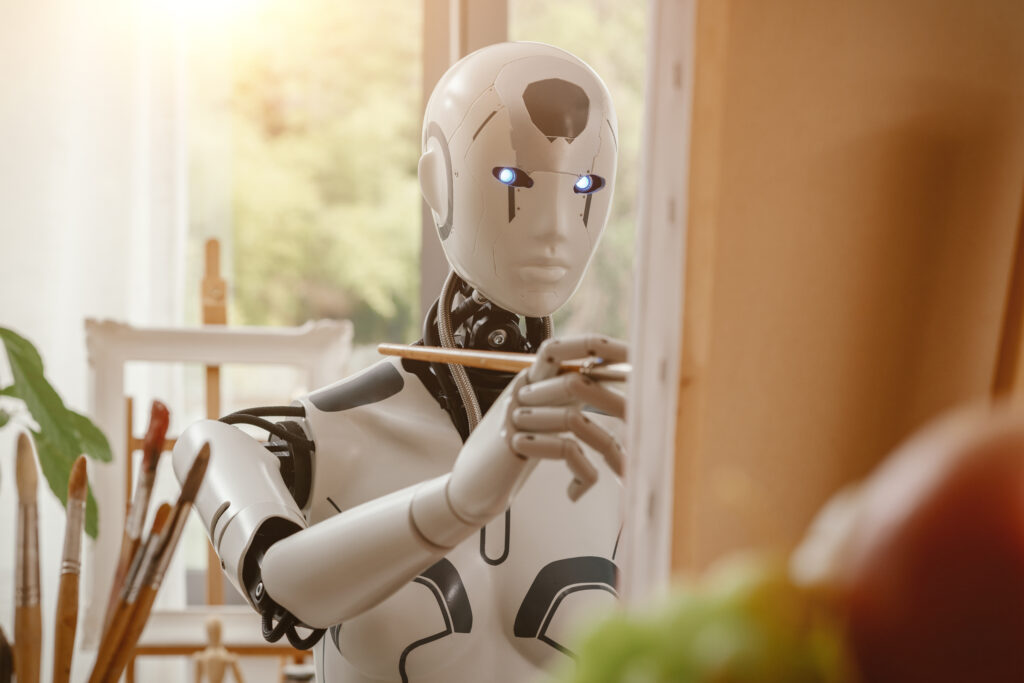
Art has traditionally been viewed as one of the most uniquely human forms of expression. Yet robots are increasingly entering creative spaces. Robotic artists can paint images, create sculptures, generate music, produce digital artwork, and even participate in performances.
Some systems operate autonomously, while others collaborate with human artists. The resulting works often prompt philosophical questions. Is creativity defined by the process or the outcome?
If a machine creates a painting that moves people emotionally, does it matter that the machine lacks consciousness or intention? The emergence of robotic art challenges assumptions about originality, authorship, and creativity itself.
Mechanical performers and entertainers
Entertainment has become another unusual frontier for robotics. Around the world, robotic performers appear in theme parks, museums, hotels, theatrical productions, and public exhibitions. Some dance. Others sing, tell stories, or interact with audiences.
These systems often serve less as practical tools and more as spectacles designed to capture attention and spark curiosity. Interestingly, audiences frequently respond more positively to robots that embrace their mechanical nature rather than attempting to appear fully human.
The appeal often comes from watching machines perform unexpected behaviours rather than believing they are human.
Robotic influencers and virtual personalities
The line between robotics and digital identity continues to blur. Some organizations have created robotic personalities that extend across physical and digital environments. A robot may have social media accounts, online followers, distinct personalities, public appearances, and marketing partnerships.
These projects highlight a growing trend in which machines are treated not merely as products but as characters.
In some cases, people develop stronger emotional connections to the personality associated with a robot than to its physical form. This reflects a broader shift in how humans relate to technology. Increasingly, the perceived identity matters as much as the hardware.
Experimental robots that serve no practical purpose
Not all robotics research aims to solve real-world problems. Universities, artists, and independent researchers often create intentionally strange robots simply to explore ideas.
Examples include:
- Robots that express simulated emotions
- Machines that interact with plants
- Autonomous sculptures
- Robots designed to appear vulnerable
- Systems that perform seemingly meaningless behaviours
At first glance, these projects may appear frivolous. In reality, many serve as research tools that help scientists understand human perception, social interaction, and emotional responses to machines. The value lies not in what the robot does, but in how people react to it.
The uncanny valley and human discomfort
Many unusual robotic projects intentionally explore a phenomenon known as the uncanny valley.
Humans generally respond positively to machines that appear somewhat human. However, as realism increases, there is often a point where slight imperfections create feelings of discomfort or unease. A robot that looks almost human, but not quite, can feel unsettling.
Researchers continue to study this effect because it influences human trust, user acceptance, social interactions, and design decisions.
The uncanny valley reveals that our reactions to robots are shaped as much by psychology as by engineering. Sometimes the strangest robots exist specifically to explore these boundaries.
Cultural differences in robotic acceptance
Not every society views unusual robots in the same way. In some cultures, robots are seen as natural extensions of technology and are readily accepted in social roles. In others, there is greater skepticism about assigning machines functions traditionally associated with humans.
These differences influence how companion robots, robotic performers, and social machines are received. What appears innovative in one country may appear unsettling in another. The weird side of robotics often reflects cultural values as much as technological capabilities.
Why weird robotics matter
It is easy to dismiss unusual robotic projects as gimmicks. Yet history suggests that experimental technologies often reveal future possibilities. Many applications that seem strange today may become commonplace tomorrow.
More importantly, these projects serve as social laboratories. They help us understand:
- How humans respond to machines
- What roles we are willing to assign to technology
- Where ethical boundaries exist
- What forms of interaction feel acceptable
The answers influence the future development of robotics far beyond these niche experiments.
What these machines reveal about us
The most interesting aspect of unusual robotics is not the machines themselves. It is what they reveal about human behaviour.
People routinely form attachments to robotic pets. They seek advice from AI systems. They attend performances by mechanical artists. Some even engage with robotic religious figures. These behaviours suggest that humans are remarkably adaptable when it comes to incorporating technology into social and cultural life.
Robotics is no longer confined to engineering. It is becoming part of psychology, art, religion, entertainment, and identity. The strange applications often reveal emerging social trends long before they become mainstream.
Looking ahead
The weird side of robotics demonstrates that technological innovation is not driven solely by practical needs. Curiosity, creativity, culture, and experimentation play equally important roles.
As robots become more capable and more integrated into society, their influence will extend beyond workplaces and infrastructure into the realms of belief, identity, and human experience.