











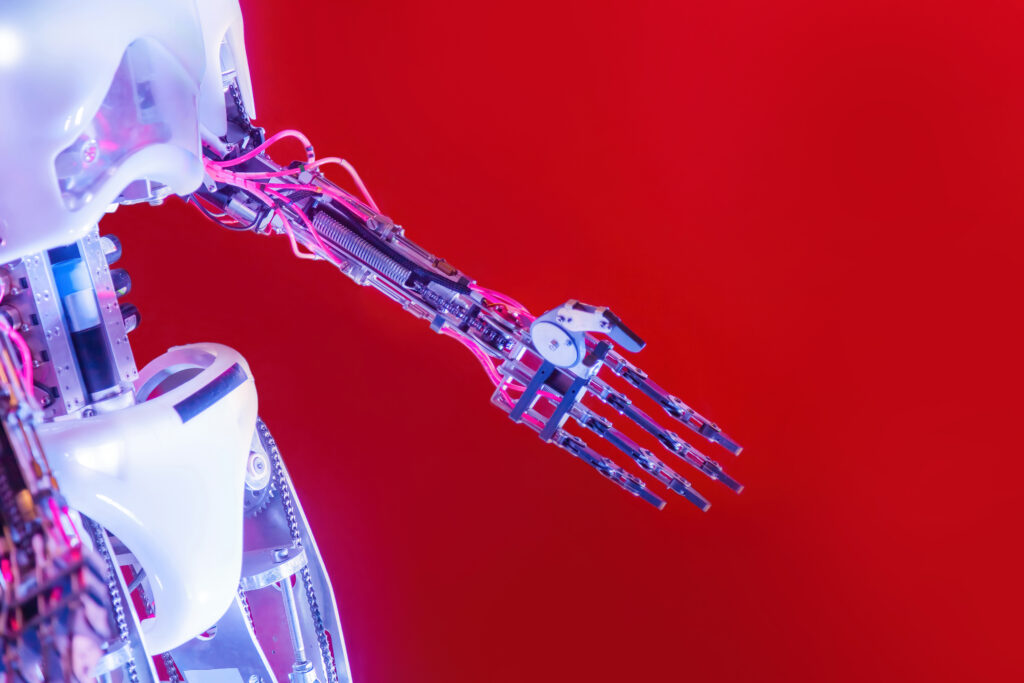
For decades, cybersecurity primarily concerned itself with information. Attackers targeted databases, websites, email systems, and corporate networks. The consequences often involved stolen data, financial losses, or operational disruptions.
Robotics changes that equation. When robots become connected to networks, cloud services, mobile applications, and artificial intelligence platforms, cyberattacks can move beyond the digital realm and into the physical world.
A compromised website may expose customer records. A compromised robot may move unexpectedly, damage equipment, disrupt operations, injure people, or create safety hazards. As robotics becomes increasingly integrated into manufacturing, healthcare, logistics, transportation, and public infrastructure, cybersecurity is no longer simply an IT concern.
It is becoming a matter of physical security and operational safety.
Every robot is a computer
One of the biggest misconceptions about robotics is that robots belong to a separate technological category. In reality, modern robots are computers with physical capabilities.
A typical robot contains:
- Operating systems
- Software applications
- Network connections
- Sensors
- Wireless communications
- Cloud integrations
- User accounts
- Remote management tools
The Internet of Things problem
The rapid growth of IoT devices has created a long history of security issues. Many connected devices have suffered from:
- Weak passwords
- Default credentials
- Unpatched vulnerabilities
- Insecure APIs
- Poor encryption
- Misconfigured services
Robots often rely on the same technologies. In some cases, robotic systems contain embedded Linux systems, web management interfaces, wireless connectivity, Bluetooth services, mobile applications, and third-party software components.
Every component introduces potential vulnerabilities. The challenge becomes even greater when robotic systems remain operational for years while software components age and security updates become less frequent.
Why robots create unique security risks
Most cybersecurity incidents affect information. Robotic incidents can affect the physical world.
A successful attack against a robotic system may influence movement, navigation, manipulation of objects, sensor readings, operational decisions, or safety mechanisms. The consequences can extend far beyond data theft.
A compromised robot may create immediate operational and safety concerns. This is why robotics security often overlaps with industrial control system security and operational technology security. The physical consequences matter just as much as the digital ones.
Understanding the robotics attack surface
Cybersecurity professionals often refer to an attack surface as the collection of entry points available to attackers. Modern robotic ecosystems have surprisingly large attack surfaces.
Many robots connect to corporate networks, industrial networks, cloud platforms, and wireless infrastructure. Any connected system potentially becomes an entry point. Poor network segmentation can allow attackers to move from traditional IT environments into robotic systems.
Remote access platforms
Organizations frequently manage robots remotely. Remote administration tools improve efficiency but also create opportunities for unauthorized access if not properly secured.
Mobile applications
Many robots are controlled or monitored through mobile apps. Weak authentication, insecure communications, or application vulnerabilities may expose robotic functions to attackers.
Robots are rarely built entirely by a single manufacturer. Components often originate from multiple suppliers. Software may contain open-source libraries and third-party code. Each dependency represents a potential supply chain risk.
Sensor manipulation attacks
Robots depend on sensors to understand their environment. If attackers can manipulate sensor data, they may influence robotic behaviour.
Potential targets include:
- Cameras
- GPS receivers
- LiDAR systems
- Radar systems
- Position sensors
A robot’s decision-making is only as reliable as the information it receives. If that information is corrupted, even well-designed systems may behave incorrectly.
Researchers have demonstrated numerous examples where sensor interference causes robotic systems to misinterpret their surroundings. In safety-critical environments, such manipulation can have serious consequences.
Denial-of-Service attacks
Not every attack aims to take control of a robot. Sometimes preventing operation is sufficient. Denial-of-service attacks can:
- Disrupt communications
- Overload systems
- Interrupt cloud services
- Disable remote management functions
In logistics environments, manufacturing facilities, and healthcare settings, operational disruptions can be extremely costly. As organizations become more dependent on robotic systems, availability becomes increasingly important.
A robot that cannot operate may create the same business impact as a robot that has been compromised.
Ransomware meets robotics
Ransomware has become one of the most disruptive forms of cybercrime. As robotic systems become integrated into operational environments, ransomware risks expand.
An attacker may not need to control a robot directly. Disrupting supporting infrastructure may be enough.
Potential targets include:
- Management servers
- Scheduling platforms
- Manufacturing systems
- Warehouse control systems
- Fleet management software
If supporting systems become unavailable, robotic operations may stop entirely. This highlights an important reality. The robot itself is only one part of a much larger ecosystem.
Autonomous systems and new risks
Artificial intelligence introduces additional security challenges. AI-powered robots increasingly make decisions based on machine learning models.
Potential concerns include:
- Model manipulation
- Data poisoning
- Adversarial inputs
- Training data compromise
An attacker who influences how an AI system interprets information may indirectly affect robotic behaviour. These attack techniques remain an active area of cybersecurity research.
As AI becomes more deeply integrated into robotics, securing decision-making processes will become increasingly important.
Industrial robots and critical infrastructure
Some of the world’s most important systems already rely on automation and robotics. Examples include:
- Manufacturing facilities
- Energy infrastructure
- Transportation systems
- Ports and logistic hubs
- Warehousing operations
Compromising robotic systems in these environments could produce consequences that extend beyond a single organization.
The risks may include:
- Production disruptions
- Supply chain interruptions
- Economic losses
- Safety incidents
For this reason, robotics security is increasingly viewed as part of broader critical infrastructure protection efforts.
Securing robotic systems
While the risks are real, many security principles remain familiar. Organizations can reduce exposure through:
Network segmentation
Separating robotic systems from general-purpose corporate networks limits opportunities for lateral movement.
Strong authentication
Default credentials should never remain in production environments. Access controls should be carefully managed and regularly reviewed.
Vulnerability management
Robotic systems require regular updates and patching processes. Known vulnerabilities often remain one of the easiest attack vectors.
Continuous monitoring
Security monitoring helps identify unusual behaviour before it becomes a major incident.
The convergence of cyber and physical security
Historically, cybersecurity and physical security operated as separate disciplines. Robotics is helping erase that distinction.
A cyber incident can now produce physical consequences. Likewise, physical access may enable cyber compromise. Organizations deploying robotics increasingly require expertise that spans cybersecurity, operational technology, physical security, safety engineering, and risk management.
This convergence represents one of the most significant security shifts of the modern era.